Introduction
A pallet truck that rusts within two years. A stacker whose paint flakes off, revealing corrosion spots on the chassis. Handling equipment that, in theory, should last ten years, but shows signs of premature wear after eighteen months of outdoor use.
This scenario is not an exception. It's a situation regularly encountered by clients who equip their sites with standard handling equipment, designed for controlled environments but used in far more demanding real-world conditions: outdoor traffic, constant humidity, industrial dust, frequent washing.
The problem doesn't come from the equipment itself, but from the surface treatment that comes with it. Major handling equipment manufacturers produce on standardised industrial lines, designed for large volumes and generic configurations. This series-production logic doesn't allow for fine-tuning the surface treatment to each client's actual operating environment.
This article reviews the three main families of anti-corrosion surface treatment for steel: galvanising, metallisation, and painting, to help you understand what really protects your equipment, and why choosing the right process matters just as much as choosing the material itself.
Why is surface treatment just as important as the design itself?
Unprotected steel rusts. This is a well-known chemical reaction: in the presence of oxygen and moisture, iron oxidises and gradually degrades. Without suitable protection, a steel chassis or structure loses its mechanical strength and appearance, and eventually needs replacing well before the end of its theoretical service life.
Surface treatment works by interrupting this process, either by isolating the metal from its environment or by providing electrochemical protection. But not all treatments are equal, and above all, no treatment is universally “the best” — each has an optimal field of application depending on the equipment's actual operating environment.
This is precisely the factor that's often overlooked with standard handling equipment: the treatment chosen at the factory corresponds to a theoretical average use, not to your reality on the ground — outdoor exposure, humidity, dust, or frequent washing, for example.
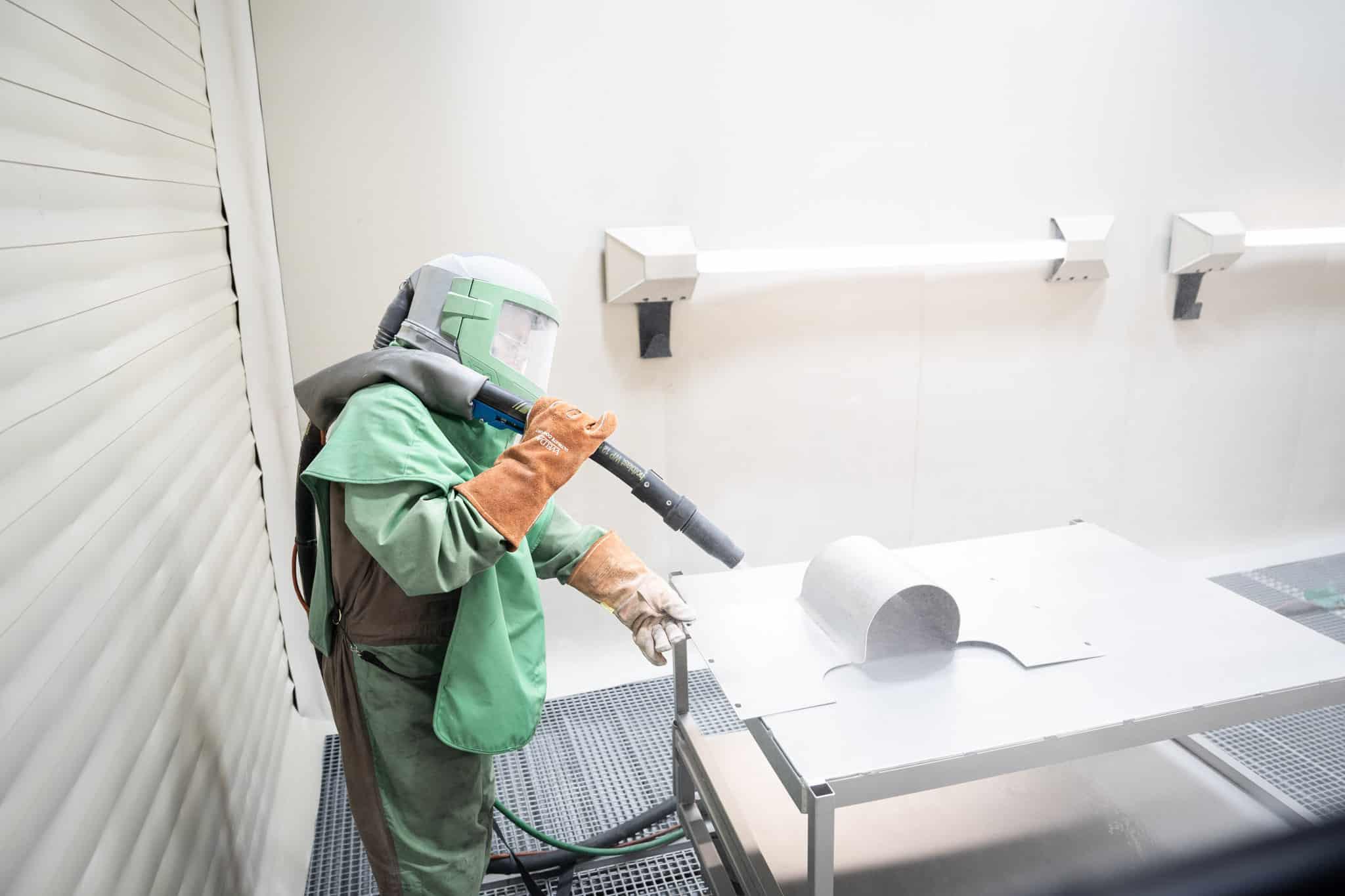
Hot-dip galvanising
Hot-dip galvanising involves immersing the steel part in a bath of molten zinc heated to around 450°C. The zinc reacts with the surface iron to form several layers of iron-zinc alloy, metallurgically bonded to the steel. The result isn't a simple film deposited on the surface, but a genuine transformation of the part's surface layer.
Why it protects so effectively
Galvanising offers double protection. On one hand, barrier protection: the zinc physically isolates the steel from air and moisture. On the other, so-called “sacrificial” electrochemical protection: if the zinc coating is scratched or locally damaged, the surrounding zinc continues to protect the exposed steel by corroding preferentially in its place. A mechanism that neither paint nor metallisation can offer with the same effectiveness.
This characteristic makes galvanising the benchmark treatment for equipment continuously exposed to humidity, weather, impacts and abrasion — exactly the conditions faced by handling equipment used outdoors or in demanding industrial environments: pallet trucks, stackers, carts, storage structures, racks.
Its real-world durability
Depending on the thickness of zinc deposited and the harshness of the environment, hot-dip galvanising compliant with the NF EN ISO 1461 standard protects steel for 20 to over 50 years in standard outdoor exposure. This is an order of magnitude well above standard industrial paint, which requires periodic touch-ups.
Its limitations
Galvanising imposes manufacturing constraints: the part must be able to be fully immersed in the bath, which limits maximum dimensions according to the size of the workshop's tank. It also requires an adapted design, for example for gas evacuation and drainage of excess zinc, which must be anticipated from the design stage.
Metallisation (or thermal spraying)
Metallisation, also called thermal spraying, involves thermally spraying zinc, aluminium or an alloy of the two onto the surface of the part using a spray gun. Unlike galvanising, there is no immersion: the metal is melted and then sprayed directly onto the prepared surface.
Why it complements galvanising
Metallisation is applied to large parts or those with complex geometry that cannot be immersed in a galvanising bath. It is particularly well suited to already-assembled structures, on-site repairs, and products whose dimensions exceed the capacity of a standard galvanising bath.
It also offers excellent adhesion for subsequent paint layers, making it a preferred base for duplex protection systems (metallisation + paint) in the most aggressive environments: marine settings, the oil industry, offshore structures.
Its limitations
Metallisation produces a layer that is less dense and less metallurgically bonded to the substrate than hot-dip galvanising, which generally makes it slightly less resistant to mechanical impact and abrasion. It nonetheless remains an excellent solution for large structures and environments where galvanising is not technically feasible.
Industrial painting
Industrial painting applies one or more layers of organic coating (epoxy, polyurethane, or alkyd depending on the use) directly onto steel that has been prepared beforehand, generally by sandblasting or micro-blasting, to ensure adhesion.
Its advantages
Paint offers the greatest aesthetic freedom: any RAL colour, gloss or matte finishes, integrated markings and signage. It is also the most cost-effective solution in the short term and can be applied to parts of any size without dimensional constraints.
Its limitations in demanding environments
Paint alone provides only barrier protection: it isolates the steel from its environment but offers no sacrificial protection. As soon as it's scratched, chipped or worn by repeated friction, the metal is directly exposed to corrosion at that exact spot, and rust then spreads under the surrounding paint layer, often invisibly, until the damage is already significant.
This is exactly the scenario frequently observed on painted handling equipment used outdoors or in dusty environments: repeated friction from wheels, handled loads and daily use eventually wears away the paint locally, and corrosion sets in at these friction points well before the equipment's theoretical end of life.
The real-world case: why standard handling equipment holds up poorly in demanding environments
Handling equipment — pallet trucks, stackers, carts — is mass-produced by major manufacturers on standardised industrial lines. This series-production logic makes sense for controlling costs and volumes, but it imposes a single surface treatment, calibrated for a theoretical average use, with no distinction made for each client's actual operating environment.
In practice, however, actual use is rarely “average”. Equipment used exclusively indoors, on dry flooring, in an air-conditioned warehouse, doesn't have the same protection needs as equipment that spends part of the day outdoors, moves between a loading dock and a humid workshop, or is exposed to abrasive industrial dust.
It is precisely in these cases that premature equipment degradation is most often observed: chassis rusting at friction points, paint chipping under repeated handling impacts, corrosion setting in on parts less accessible to cleaning. The equipment isn't “bad” in itself — it's simply treated for a different use than the one it's actually subjected to.
This is where custom manufacturing changes the game. By adapting the surface treatment right from the design stage — hot-dip galvanising for equipment intended for outdoor or humid use, for example — it becomes possible to double or triple the equipment's actual service life, without a disproportionate extra cost compared to the price of early replacement.
Tableau comparatif des trois procédés :
| Criterion | Hot-dip galvanising | Metallisation | Industrial painting |
| Sacrificial protection | Oui (forte) | Limitée | Aucune |
| Outdoor durability | 20 to 50 years | 15 to 25 years | 5 to 10 years (with touch-ups) |
| Impact/abrasion resistance | High | Medium | Low to medium |
| Part size constraint | Limited by bath size | None | None |
| Customisation | Limited (zinc grey) | Limited | RAL colours |
Relative cost | Moderate | Moderate to high | Low to moderate |
| Ideal for | Équipements extérieurs, manutention, structures exposées | Grandes structures, réparations, milieu marin | Finition esthétique, environnements protégés |
How to choose the right treatment for your equipment?
Three questions help guide the choice.
- Where will the equipment actually be used? Indoors, dry and clean, outdoors exposed to the weather, or in an intermediate environment with humidity and dust? This is the most decisive question, and often the one that isn't asked when purchasing standard equipment.
- What is the equipment's expected service life? Equipment intended for temporary use or frequent replacement doesn't justify the same level of protection investment as equipment expected to last fifteen or twenty years.
- Are there any aesthetic or signage requirements? If a specific colour or visual marking is needed (zone identification, safety colour codes), paint remains essential, potentially in addition to metallisation for the most demanding environments.
For custom handling equipment, this upfront analysis makes it possible to precisely tailor the surface treatment to actual use — an advantage that standard manufacturing structurally cannot offer.
ARTECH: complete mastery of surface treatments
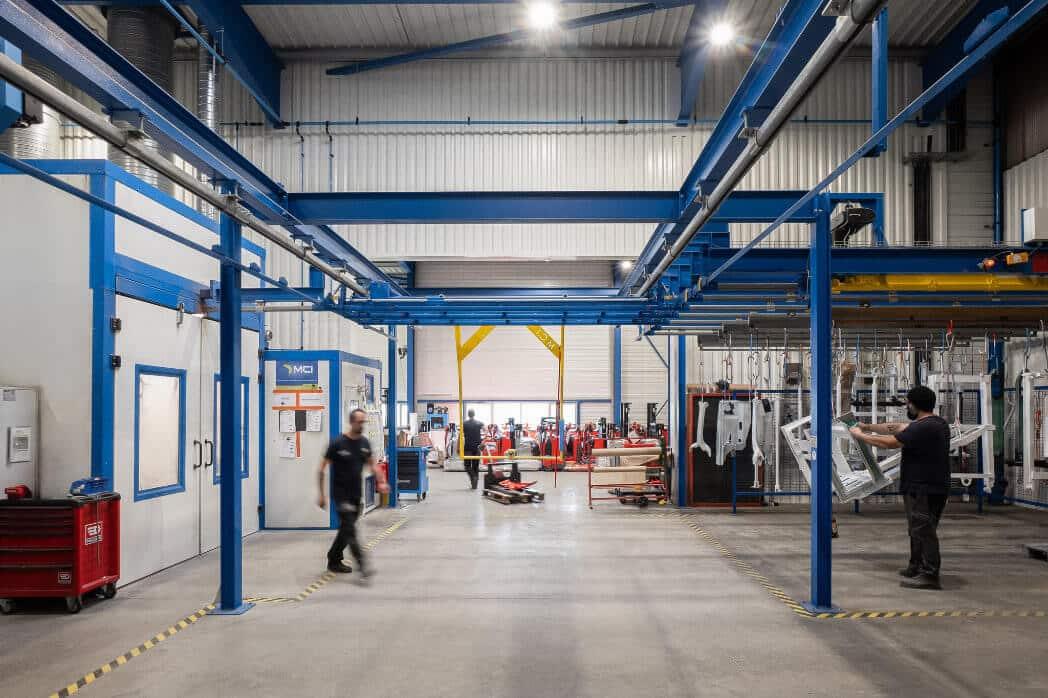
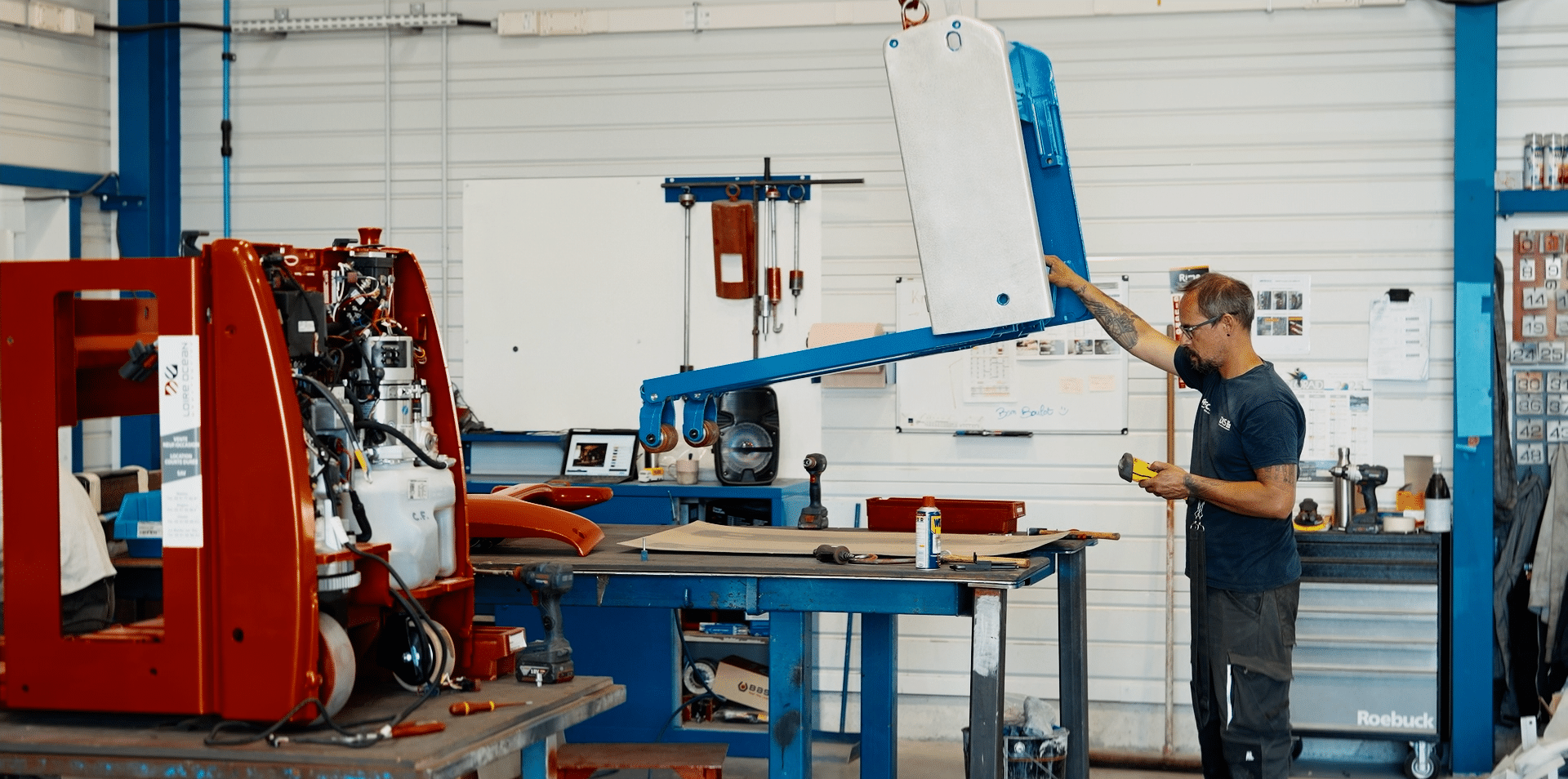
ARTECH integrates all the surface treatment processes presented in this article: galvanising, metallisation and micro-blasting, alongside its metal fabrication, welding and sheet metal work capabilities. This vertical integration allows surface treatment to be tailored right from the design stage, based on the actual use and operating environment of each piece of equipment.
To find out more about our full range of metal manufacturing expertise, see our complete guide to industrial metal fabrication, and discover concrete examples in our productions.
Do you have equipment that needs adapting to your operating environment? Talk to our team