Introduction
Do you need a custom metal part, a welded chassis, a stainless-steel tank or handling equipment tailored to your processes? Have you heard of industrial metal fabrication without knowing exactly what it involves?
Industrial metal fabrication is a metalworking trade that is both age-old and constantly evolving. It lies at the heart of many industries: food processing, chemicals, construction, defence, renewable energy, and more, and yet it often remains little known among the clients who nevertheless rely on it daily.
In this article, ARTECH offers a clear, comprehensive definition of industrial metal fabrication: what it is, how it works, which processes it uses, which materials it transforms, and in which sectors it is applied. The goal: to give you all the keys to better understand this trade and identify the right partner for your project.
Industrial metal fabrication: definition
Industrial metal fabrication refers to the full range of manufacturing techniques used to shape flat or tubular metal products (sheet, sections, tubes) to create parts, assemblies or metal structures intended for industrial applications.
The French term “chaudronnerie” historically comes from the word “chaudron” (cauldron): in the 17th century, the first metal fabricators made copper vessels for cooking or pharmacy use. Today, the trade has evolved considerably. It's no longer about making cauldrons, but about designing and producing complex, custom metal equipment that meets precise industrial specifications.
An industrial metal fabricator works to order, from drawings supplied by the client or co-designed with them, to manufacture both single units (prototypes, replacement parts) and small to medium series (recurring equipment, production lines).
In short: industrial metal fabrication is the transformation of raw metal (sheet, tubes, sections) into functional, custom metal structures for industry.
Metal fabrication, sheet metal work, welding, metalwork: what's the difference?
These terms are often confused. Here's how to tell them apart:
Metal fabrication in the strict sense refers to the manufacture of structures from relatively thick sheet metal (generally 3 to 70 mm), including tanks, vessels, basins, bends, reducers, and heavy structures. It involves major forming techniques (rolling, stamping, bending) and structural welds.
Sheet metal work applies to thin sheet metal (roughly 0.5 to 3 mm). It covers the manufacture of bodywork, covers, cladding, enclosures, and light structures. The processes used — laser cutting, press bending — are more precise and suited to neat finishes.
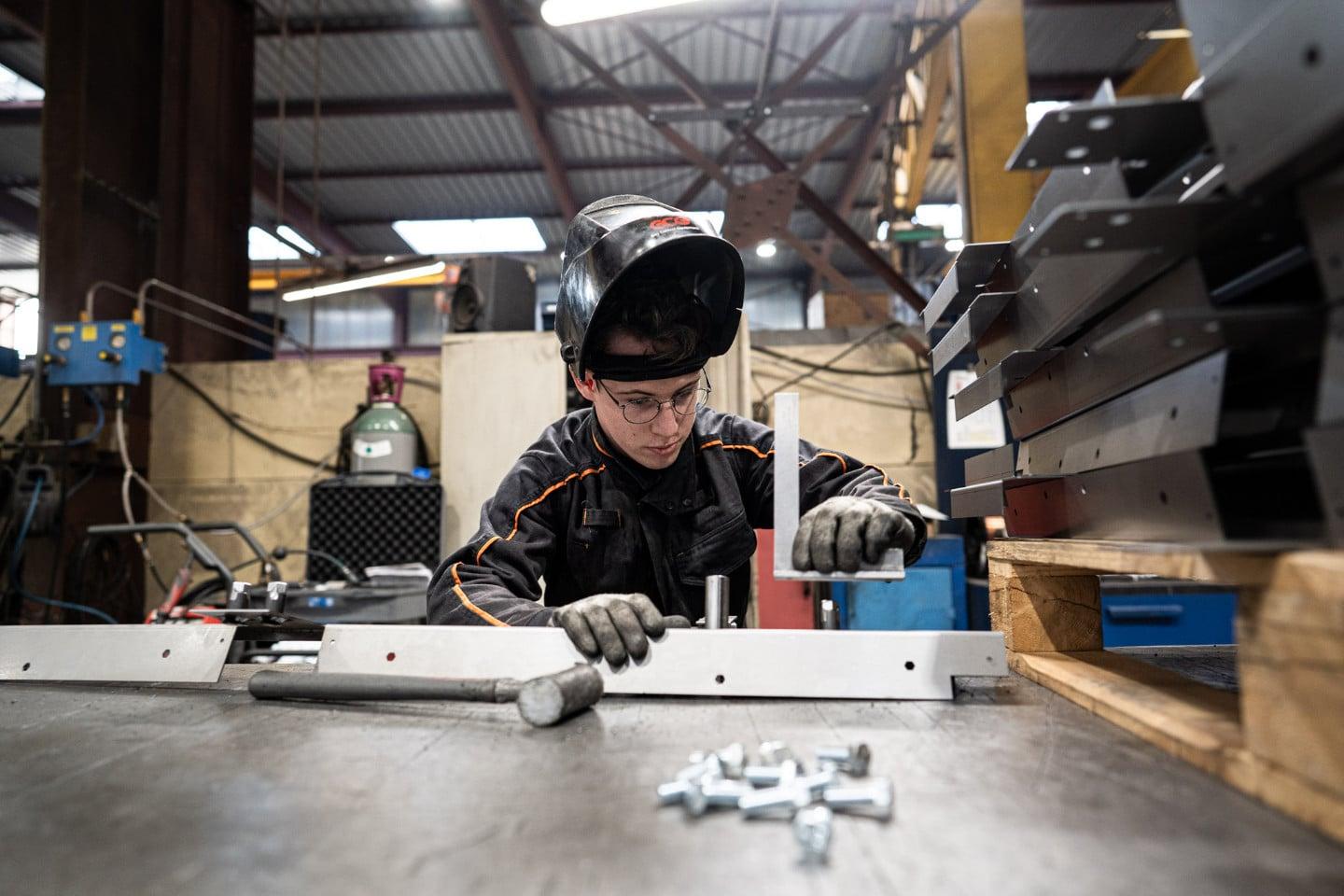
Metal fabrication and welding refers more specifically to the welded assembly of mechanical parts to form structures or sub-assemblies: chassis, machine frames, cradles, supports. This is often the heart of a complex metal fabrication project.
Metalwork (métallerie), for its part, covers the manufacture of architectural or functional structures: staircases, guardrails, walkways, gates, railings. It differs from metal fabrication in that its applications are more geared towards building and fitting-out.
In practice, these activities are often carried out together by the same workshop. This is notably the case at ARTECH, which masters all these skills under one roof.
The main stages of an industrial metal fabrication project
A metal fabrication project generally follows these stages:
1. Needs analysis and design office
Everything starts with defining the specifications: what equipment needs to be manufactured? What are the materials, dimensions, environmental constraints (temperature, corrosion, pressure), and mechanical strength requirements?
If the client has drawings, they provide them (in STEP, IGS or IGES format for 3D files). If not, or if the project requires adjustments, the design office steps in to model the part using 3D software (SolidWorks, for example), optimise the design, and validate the technical solution before any production begins.
2. Cutting and forming of materials
A metal fabrication project generally follows these stages:
tubes are cut to the required dimensions. The most common cutting processes are:
- Laser cutting: millimetre precision, ideal for thin sheet and complex geometries.
- Punching: fast and cost-effective for series production.
- Sawing: suited to sections, bars and tubes.
- Shearing: for straight-line cutting of sheet metal.
Next comes forming: giving the parts their final geometry before assembly:
- Stamping and forming: for complex three-dimensional geometries.
- Press brake bending: to form precise angles in sheet metal. The most powerful presses can bend sheets up to 4 metres long and several centimetres thick.
- Rolling: to form cylinders, cones or bends from flat sheets.
- Tube bending: to curve round tubes with controlled radius and limited distortion.
Assembly and welding
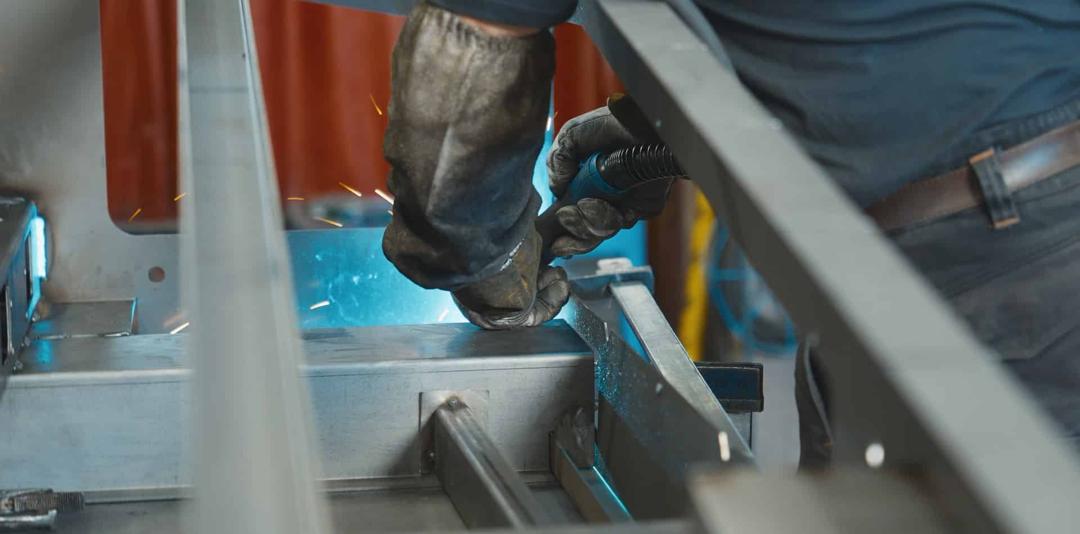
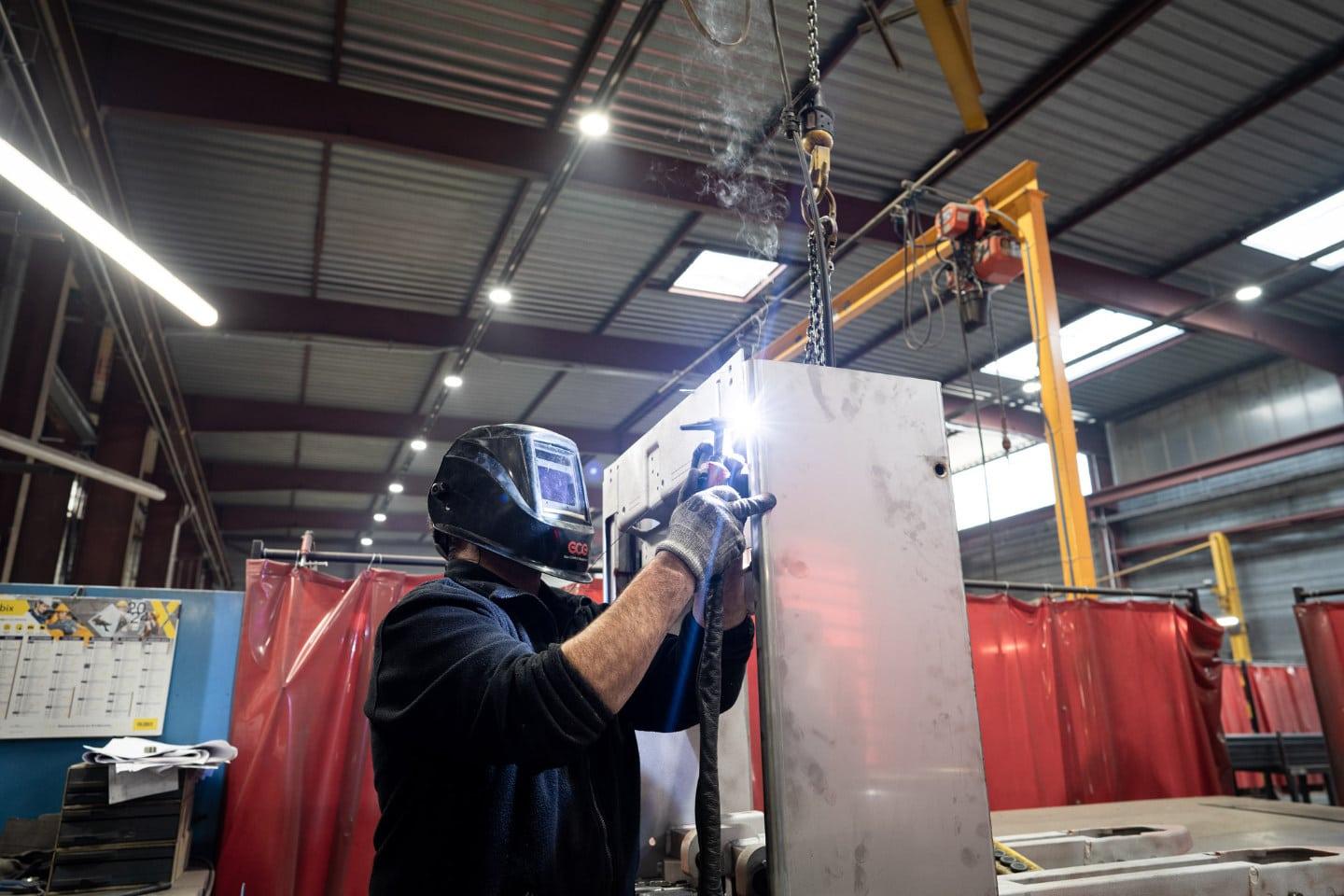
This is the central stage of metal fabrication and welding. The cut and formed parts are assembled and joined together by welding. Several processes are used depending on the materials and requirements:
- MIG/MAG welding (Metal Inert/Active Gas): a versatile, productive process suited to ordinary steel and medium to heavy thicknesses.
- TIG welding (Tungsten Inert Gas): a high-precision process, ideal for stainless steel, aluminium and neat beads. Essential in sectors where surface quality is paramount (food, pharmaceutical, chemical).
- Robotic welding: for series production requiring repeatability and high throughput. Robotic welding guarantees consistent bead quality, whereas manual welding can show variation.
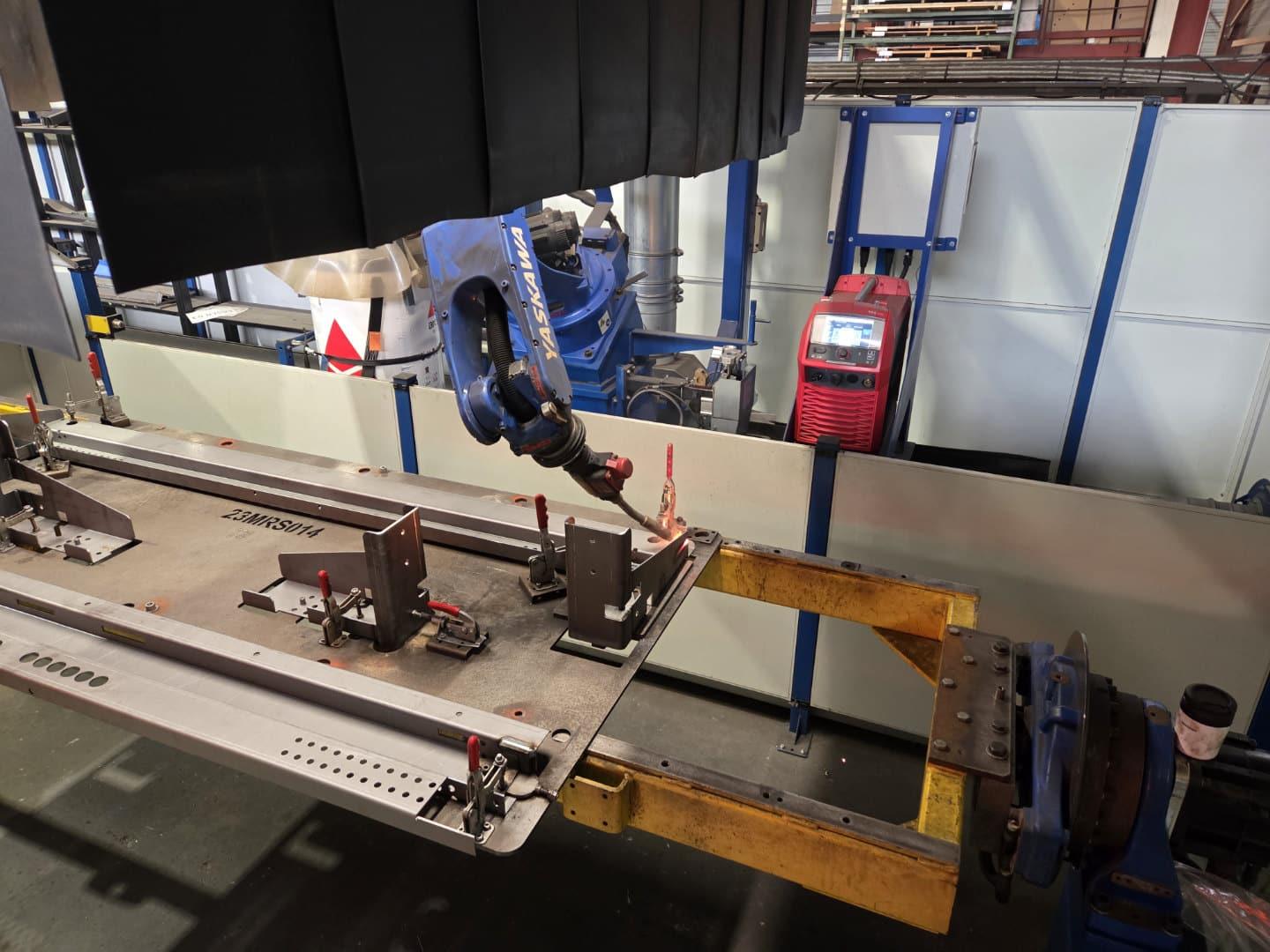
Qualifying welders and welding procedures is a major issue in industrial metal fabrication. WPS (Welding Procedure Specification) and PQR (Procedure Qualification Record) guarantee that the processes used are suited to the materials and mechanical requirements of the project.
4. Surface treatment
Once the product is manufactured, surface treatment protects the metal from corrosion and improves its visual appearance. The main processes used in industrial metal fabrication are:
- Hot-dip galvanising: immersing the product in a bath of molten zinc. A very durable anti-corrosion protection, suited to outdoor structures, construction and road infrastructure.
- Metallisation (or thermal spraying): thermal projection of zinc or aluminium onto the surface. Allows large products that cannot be galvanised to be treated, and provides excellent adhesion for paint.
- Micro-blasting: projecting beads onto the surface to achieve an even, matte, decontaminated finish. Widely used on stainless steel for the food and pharmaceutical sectors.
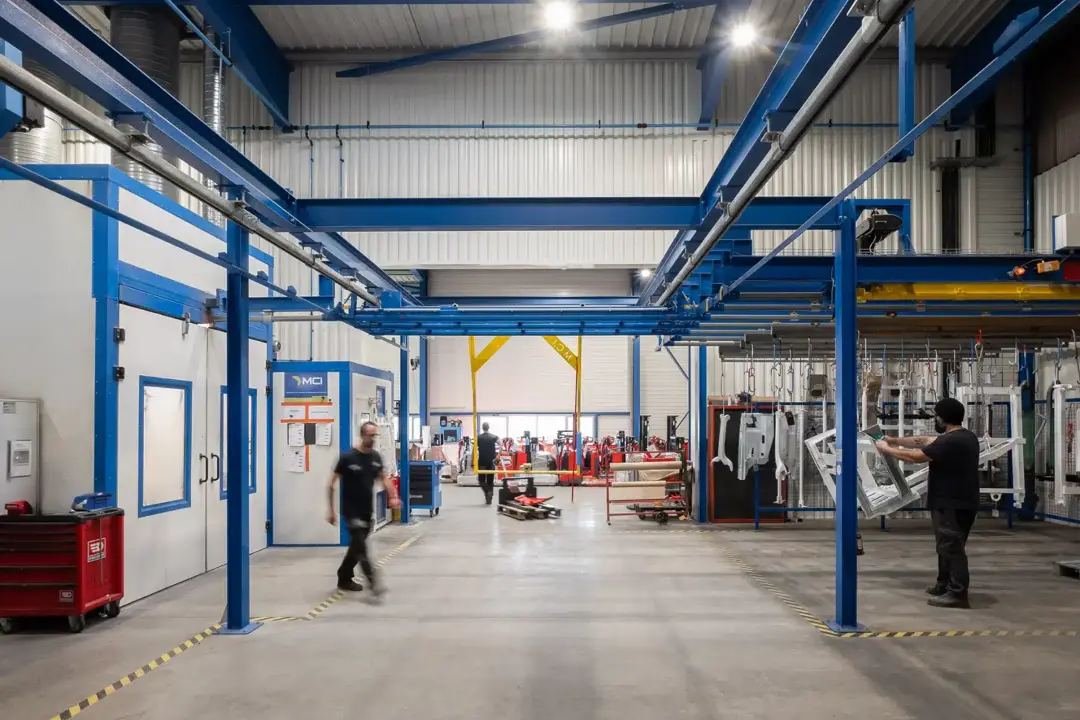
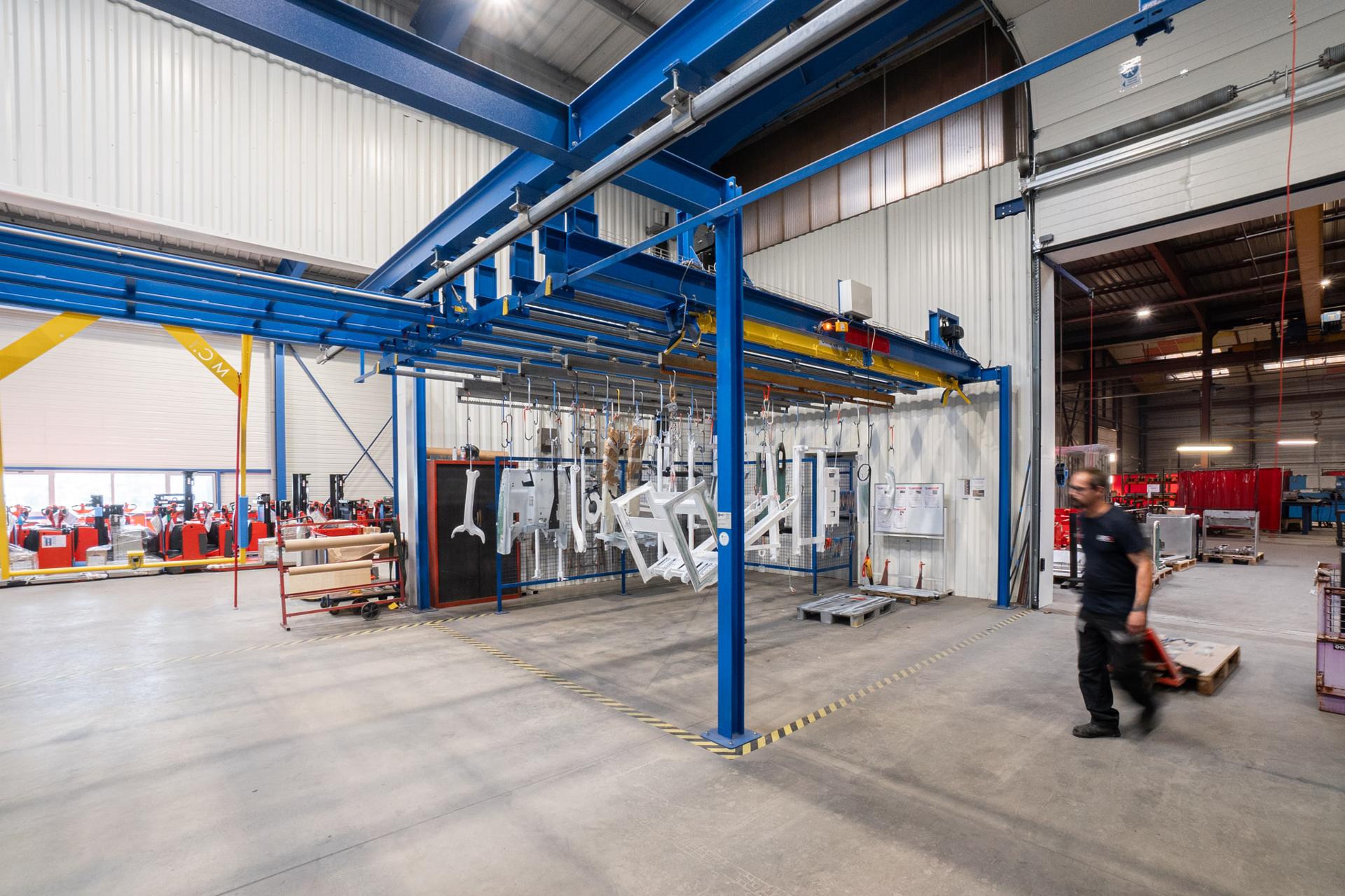
- Industrial painting: protection and coloured finish according to the client's RAL specifications.
- Stainless-steel coating: cladding steel parts in stainless steel for hygiene or aesthetic reasons.
5. Quality control and logistics
Before delivery, each product undergoes a dimensional and visual inspection: checking dimensions, flatness, and weld quality. Non-destructive testing (NDT) can be carried out according to the requirements of the specifications. Traceability documents (material certificates, inspection reports, test reports) are provided to the client.
Packaging and logistics close out the project: protecting the parts, palletising, and organising transport according to the constraints of the site or production line.
Materials used in industrial metal fabrication
Choosing the right material is a key decision that shapes the manufacturing processes, surface treatments and performance of the product. Here are the main materials used:
Steel (mild steel, S235, S355) is the base material of industrial metal fabrication. Strong, cost-effective and easy to weld, it is used for almost all structures, chassis and handling equipment. It requires surface treatment to resist corrosion.
Stainless steel (304, 316L, 321) is preferred in corrosive, humid environments or in contact with food products. Harder to work than ordinary steel (TIG welding is mandatory, thermal distortion must be controlled), it offers inherent corrosion resistance and an impeccable surface finish after micro-blasting or electropolishing.
Aluminium is chosen for its light weight and corrosion resistance. It is used in mobile equipment (handling, transport), structures requiring low deadweight, and certain food industry applications.
Copper and its alloys remain in use for specific applications (piping, heat exchangers, electrical applications).
Application sectors for industrial metal fabrication
Industrial metal fabrication is a cross-sector trade used across many industries:
The food industry is one of the biggest consumers of stainless-steel metal fabrication: storage and process tanks, conveyors, stainless-steel handling equipment, work tables, machine guards. Hygiene requirements (EHEDG, FDA standards) demand careful surface finishes and the exclusive use of 316L stainless steel in areas in contact with food.
The chemical and pharmaceutical industry requires equipment resistant to corrosive agents, high temperatures and pressures. Sealed stainless-steel tanks, process piping, reactors and equipment supports are the main products.
Handling and logistics rely on metal fabrication for manufacturing and adapting lifting and moving equipment: custom pallet trucks, special carts, stainless-steel stackers, lifting beams, storage supports.
Construction and public works use metal fabrication for industrial staircases, guardrails, walkways, grating, safety structures, and site furniture.
Defence and naval sectors rely on robust, traceable welded metal assemblies designed to withstand harsh environments (vibration, marine corrosion, thermal shock).
Renewable energy is driving growing demand for metal support structures for solar panels, wind turbine mast components, and hydroelectric equipment.
Signage and street furniture rely on metal fabrication for manufacturing totems, bollards, terminals, benches and display structures for public spaces, generally in galvanised steel or stainless steel.

Why use an industrial metal fabricator rather than a standard supplier?
Industrial metal fabrication meets needs that standard products cannot satisfy:
The specificity of the need. Your requirements regarding dimensions, materials, environment or use are often too particular to be met by a catalogue product. An industrial metal fabricator designs and manufactures exactly what you specify.
Control over the production chain. An integrated metal fabricator with a design office, a full workshop and a surface treatment service gives you a single point of contact from design to delivery, with no break in accountability.
Responsiveness. For urgent parts, a well-equipped metal fabricator can offer very short lead times, sometimes under 72 hours for standard parts, depending on material availability.
Documented quality. An ISO 9001-certified metal fabricator provides you with full traceability: material certificates, inspection reports, welder qualifications. Essential guarantees in regulated sectors.