Introduction
Industrial metal fabrication is a sector built on precise technical know-how, specialised equipment, and the ability to meet often complex specifications. Yet for a maintenance manager or a purchasing director looking for a metal fabrication partner, it isn't always easy to identify exactly what this trade covers, which techniques are used, which materials are worked, and what criteria help distinguish an industrial metal fabricator capable of meeting their needs.
This guide was written to answer these questions precisely and practically. It covers the full range of industrial metal fabrication techniques: metal fabrication itself, sheet metal work, metal fabrication and welding, surface treatment, as well as the most common metals and the industrial sectors in which these skills apply.
If you're looking for a more general introduction to the trade, see our article on the definition of industrial metal fabrication. This guide goes into technical detail to give you the keys to an informed purchasing decision.
The three pillars of industrial metal fabrication
A full-service industrial metal fabrication workshop is built on three broad families of expertise, often practised together but corresponding to distinct technical logics.
Metal fabrication in the strict sense
LMetal fabrication in the strict sense refers to the manufacture of structures from medium- to heavy-gauge sheet metal, generally 3 to 70 mm, using major forming processes: rolling, stamping, mandrel bending, hot forming.
Typical products include storage or process tanks, pressure vessels, containment basins, pipe bends and reducers, silos, heat exchangers, and industrial machine bodies. These parts are subject to mechanical, thermal or pressure stresses that require rigorous control of welding processes and documented operator qualification.
This type of metal fabrication is particularly common in the chemical, petrochemical and food industries, and in the energy sector.
Sheet metal work
Sheet metal work applies to thinner sheets, roughly 0.5 to 3 mm, and uses high-precision cutting and forming processes. It covers the manufacture of industrial bodywork, machine covers, cladding, electrical enclosures, protective guards, and light bins and trays.
The associated processes are laser cutting, punching, sawing, and bending on a digital press brake. Precision is the key focus: dimensional tolerances are tight, finishes are neat, and production volumes can be higher than in heavy metal fabrication.
Sheet metal work is widely used in the automotive industry, special-purpose machinery, agricultural equipment, logistics and industrial furniture.
Metal fabrication and welding
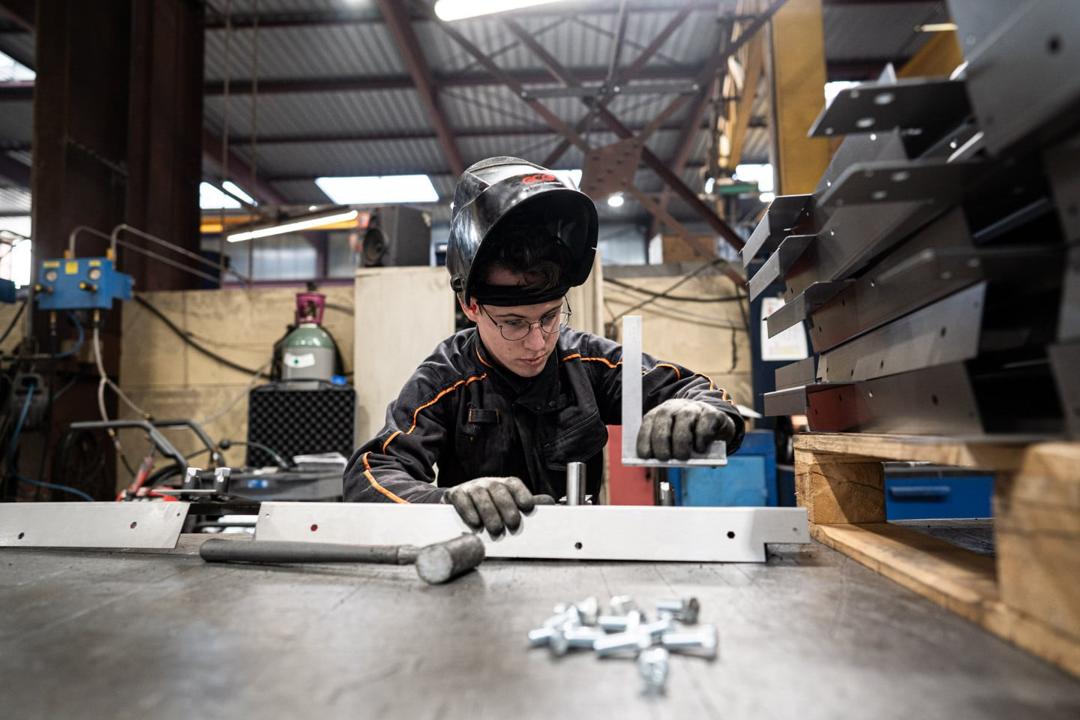
Metal fabrication and welding refers to the welded assembly of mechanical parts to form functional structures or sub-assemblies: machine chassis, production line frames, cradles, load-bearing structures, equipment supports, tubular assemblies.
This is often the heart of a metal fabrication project: the cut and formed parts are assembled here into rigid structures, subjected to the real mechanical stresses of the final application. Weld bead quality, control of thermal distortion, and compliance with qualified welding procedures (WPS/PQR) are top-priority criteria.
Technical processes in detail
Cutting
Laser cutting is now the benchmark process for cutting steel, stainless steel and aluminium sheet. It offers precision to within a tenth of a millimetre, high speed, and the ability to cut complex shapes without dedicated tooling. It suits both single units and series production.
Punching complements laser cutting for large series and repetitive geometries. It is particularly efficient for drilling standard holes in large quantities.
Sawing applies to sections, bars and tubes. It provides precise 90° or angled cuts for subsequent assembly operations.
Forming
Bending on a computer-controlled press brake is the most common forming process in sheet metal work and light metal fabrication. Modern presses can bend sheets to angles controlled to within a tenth of a degree, using reproducible digital programs. Capacities vary between workshops: at ARTECH, our press brakes reach 170 tonnes of force and can bend sheets up to 4 metres long — a real advantage for large structures.
Rolling shapes cylinders, cones, or curved surfaces from flat sheets. It is essential for manufacturing tank shells, vessels and cylindrical bodies.
Tube bending curves round tubes with precise control of the bend radius while limiting ovalisation and distortion. It is used in industrial piping, furniture and structural work.
Welding
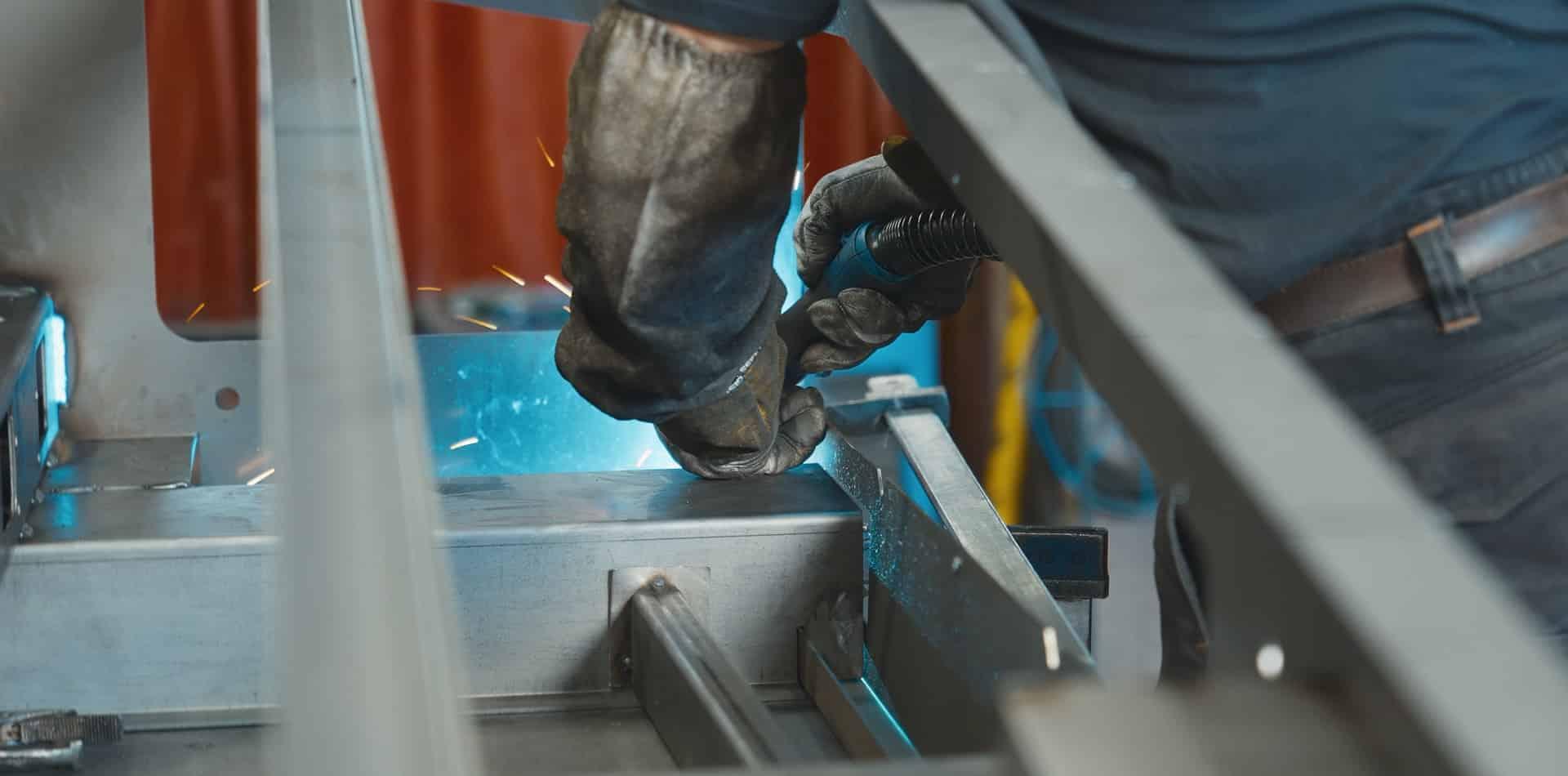
Welding is the central operation in any metal fabrication project. Three processes are mainly used in industrial metal fabrication.
MIG/MAG welding (Metal Inert Gas / Metal Active Gas) is the most common process for ordinary steel. It offers good productivity, great versatility across thicknesses, and suits both small series and larger production runs. It is the benchmark process for welded metal structures in S235 or S355 steel.
TIG welding (Tungsten Inert Gas) is the precision process. It produces higher-quality beads with a very small heat-affected zone, making it essential for stainless steel, aluminium, and any application where surface quality is paramount. The food, pharmaceutical, fine chemical and medical industries systematically require it.
Robotic welding delivers the repeatability and pace that manual welding cannot guarantee on series production. A welding robot programs and reproduces exactly the same bead from one part to the next, eliminating operator-to-operator variation and reducing scrap. ARTECH has invested in a Yaskawa welding robot, enabling it to offer this service for its clients' regular series.
Qualifying welding procedures is a critical point, particularly in regulated sectors. WPS (Welding Procedure Specification) define the exact parameters of each operation, and PQR (Procedure Qualification Record) validate that these procedures produce results compliant with applicable standards. An ISO 9001-certified metal fabricator holds these documents and can provide them to the client on request.
Piping and tube work
Industrial piping covers the manufacture and assembly of tube networks for transporting fluids, gases or products in industrial processes. It requires specific expertise: selecting steel or stainless steel grades according to the fluids carried, mastering standardised fittings, flanges and accessories, and qualifying tube welds (processes, positions, inspections).
Bending round tubes is an integral part of this activity. It allows custom bends to be made without welding, with controlled radii and minimal deformation of the cross-section.
The materials we work with
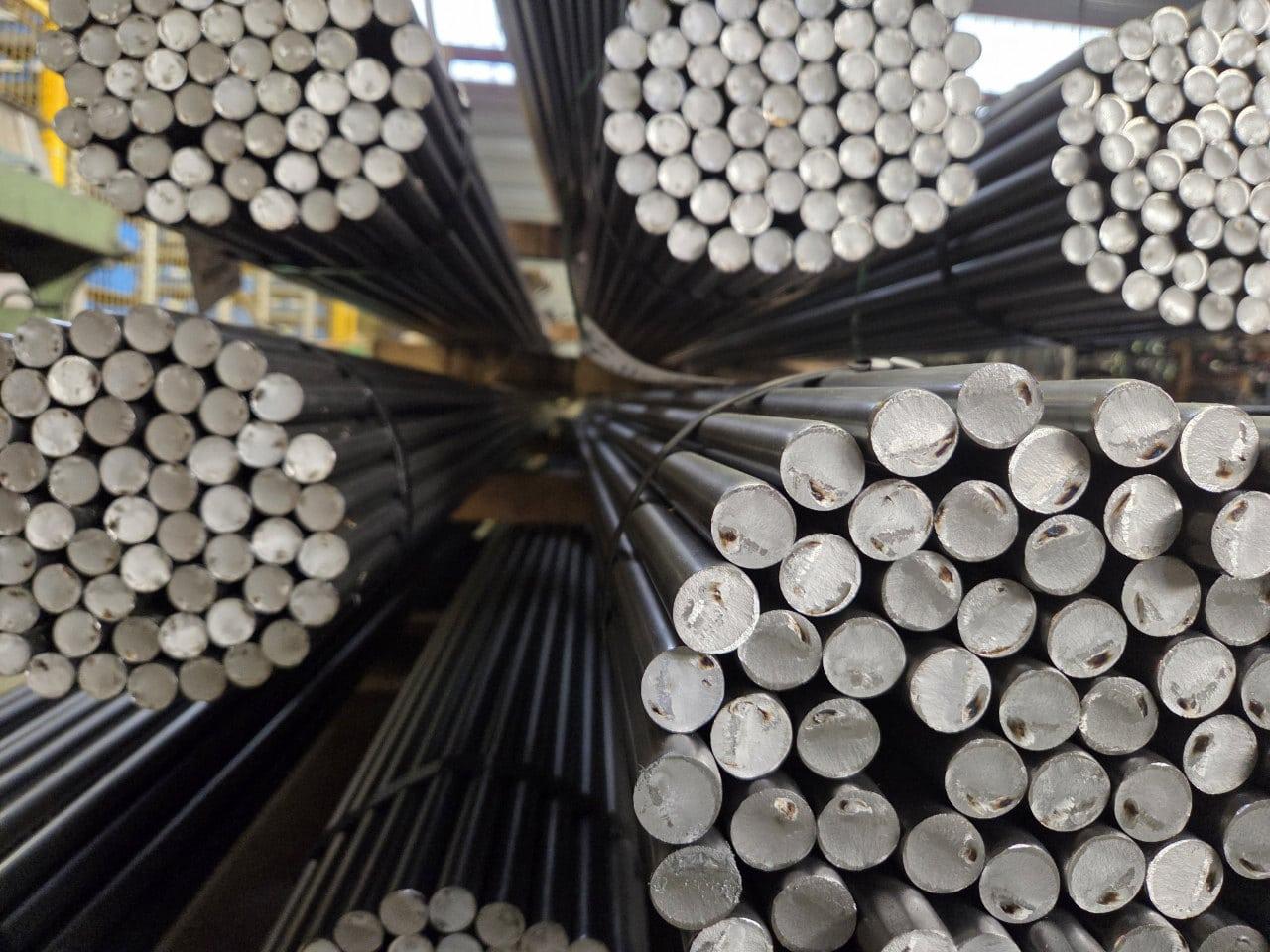
Unalloyed steel (S235, S355)
This is the base material for the vast majority of industrial metal fabrication work. Strong, easy to weld using any process, cost-effective and available in many commercial forms (sheet, sections, tubes, bars), it is the default choice for structures, chassis and equipment not subject to specific corrosion constraints. It requires surface treatment (galvanising, metallisation, painting) to withstand humid or outdoor environments.
Stainless steel (304, 316L, 321)
Stainless steel is the material of choice whenever the application demands inherent corrosion resistance, ease of cleaning, or contact with food products or chemicals. Grade 304 is the all-purpose stainless steel, suited to most everyday applications. Grade 316L adds molybdenum, which improves resistance to chlorides and acids, essential in marine environments, chemicals and intensive food processing. Grade 321 is titanium-stabilised for high-temperature applications.
Stainless steel is harder to work than ordinary steel: it conducts heat less well (risk of distortion), it work-hardens (bending is trickier), and TIG welding is almost always required to guarantee bead quality and avoid sensitising the steel to intergranular corrosion.
Aluminium
Aluminium and its alloys (mainly the 5000 and 6000 series) are chosen for their light weight — a density of 2.7 g/cm³ versus 7.85 for steel — and their natural corrosion resistance. They are particularly suited to mobile equipment, weight-constrained structures, and certain food industry applications. Welding aluminium requires specific expertise: mandatory pre-cleaning, TIG or pulsed MIG process, and enhanced gas shielding.
Copper and its alloys
Copper remains present in certain piping, heat exchanger and chemical process equipment applications. Its high thermal conductivity and corrosion resistance make it a material of choice in these niches, although its cost limits it to specific applications.
Surface treatment: the final step, not the least important
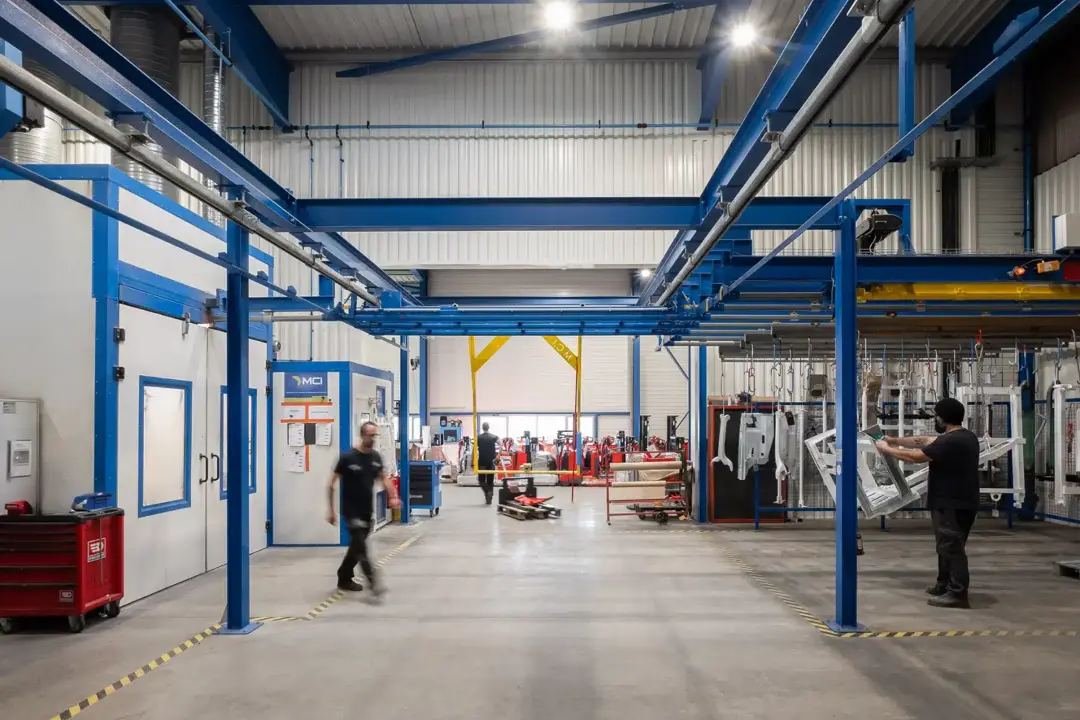
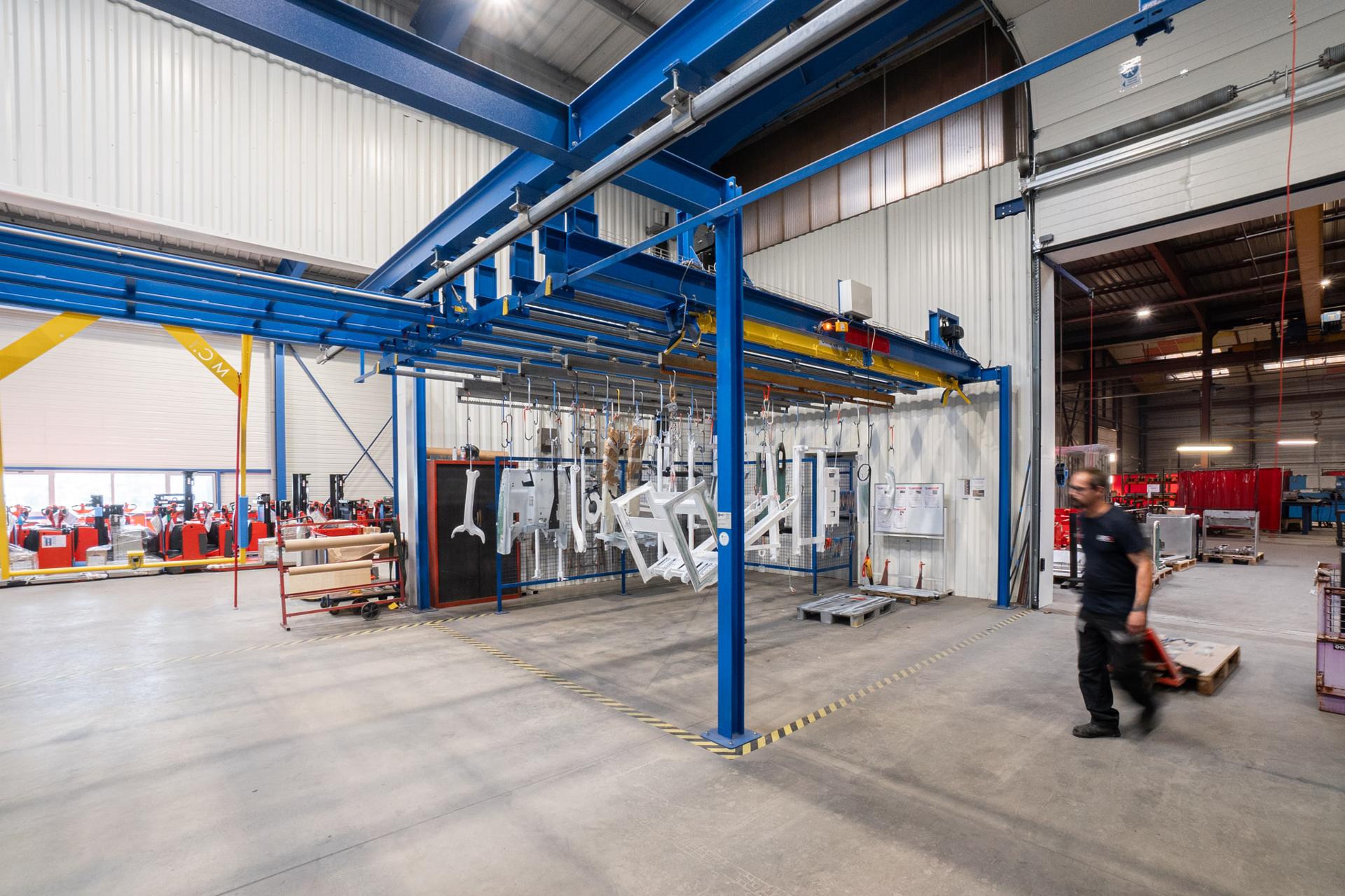
Surface treatment is often seen as a simple finishing touch. In reality, it's a critical step that determines the durability of the product, its regulatory compliance and its visual appearance. A metal fabricator with in-house surface treatment offers a real advantage: a single point of contact, shorter lead times, and technical consistency between manufacturing and finishing. To find out more, see our dedicated page on surface treatment at ARTECH.
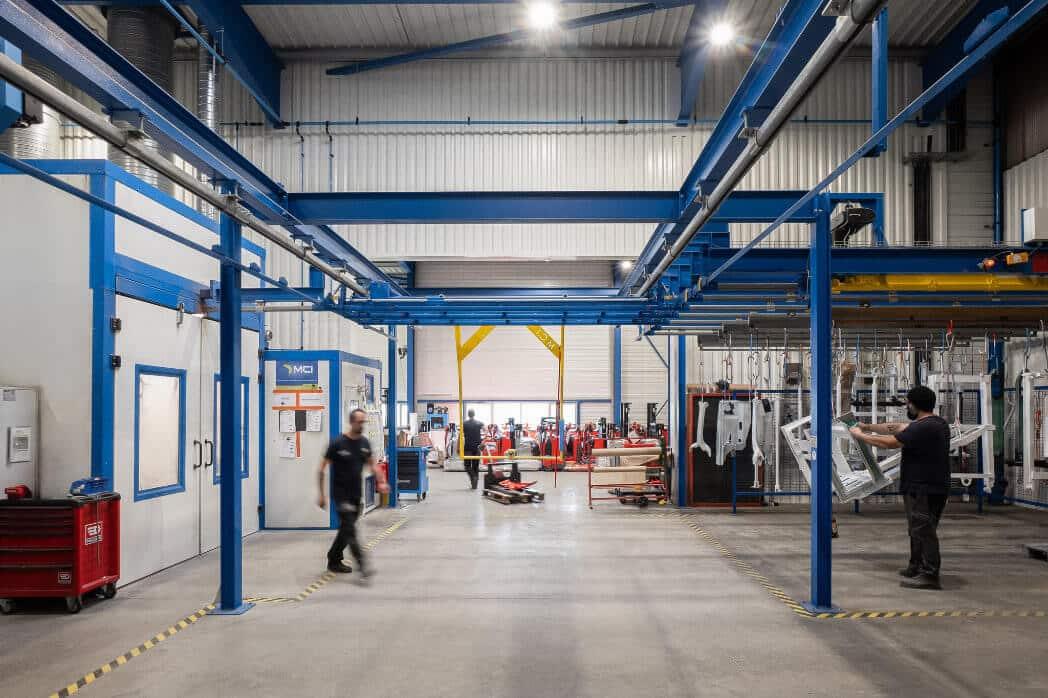
Hot-dip galvanising protects steel by immersion in a zinc bath at 450°C. It forms a coating metallurgically bonded to the steel, lasting 20 to 50 years depending on the environment. It is the benchmark protection for outdoor structures, street furniture, construction equipment and structures exposed to humidity.
Metallisation, or thermal spraying, thermally projects zinc or aluminium onto the surface of the product. It is suited to large parts that cannot be galvanised, and offers excellent adhesion for subsequent paint layers. It is widely used in the oil, naval and structural steelwork sectors.
Micro-blasting projects glass or stainless-steel beads onto the surface to achieve an even, matte, decontaminated finish. On stainless steel, it removes oxidation and weld marks and restores a uniform appearance, essential in food processing, pharmaceuticals and urban environments. On steel, it serves as surface preparation before painting or coating.
Application sectors: who uses an industrial metal fabricator?
How to select the right industrial metal fabricator?
When faced with a metal fabrication need, there are several criteria for selecting a partner. Here are the main ones:
- ISO 9001 certification is the first objective filter. It confirms that the supplier has a documented quality management system, with material traceability, qualified welding procedures, and regular quality reviews. For an industrial buyer, this is a non-negotiable minimum guarantee.
- Vertical integration: design office, methods office, manufacturing and surface treatment under one roof. This reduces the risk of breaks in the chain of responsibility and simplifies project follow-up. A single point of contact from design to delivery also means fewer delays and fewer handover errors.
- Real machine capabilities: what force and length can the press brakes handle? What formats and thicknesses can the laser cutter handle? Is robotic welding available? This concrete information determines whether the supplier can actually process your part.
- Sector references: a metal fabricator who has already worked in your sector understands your regulatory constraints and implicit requirements. Their past work is the best proof of their ability to support you.
- Responsiveness: in industrial maintenance, lead times can be critical. A supplier able to process your request within 48 hours and deliver within 72 hours for standard parts is a real operational advantage.
Take a look at some of our productions to get a concrete idea of the projects we carry out for our industrial clients.
ARTECH: an integrated partner for your industrial metal fabrication needs
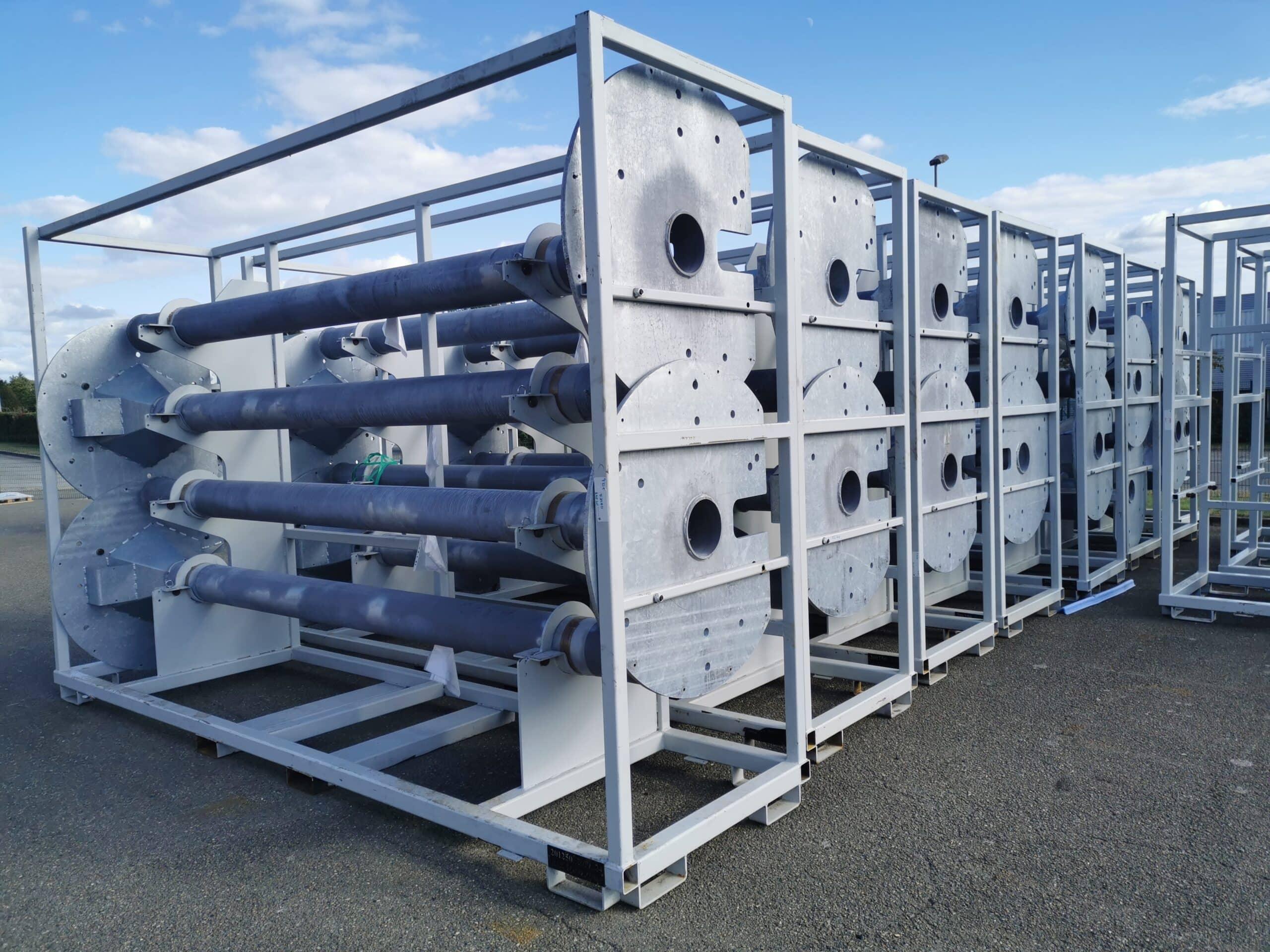
Founded in 1990 in Meslay-du-Maine, Mayenne, ARTECH is an industrial metal fabrication company and a subsidiary of the DIS Group. Our 3,500 m² workshop brings together, under one roof, all the skills described in this guide: a SolidWorks design office, laser cutting, bending up to 4 metres, manual and robotic TIG/MIG welding, industrial piping, galvanising, metallisation and micro-blasting.
We support manufacturers, local authorities and start-ups on projects ranging from a single prototype to small series, with controlled lead times and full traceability.
Do you have a metal fabrication project? Talk to our team — response within 48 working hours. You can send us your plans in STEP, IGS or IGES format.