While steel has undeniable physical properties that make it essential in many fields, it also has two weaknesses: oxidation in certain harsh environments when it isn't solid stainless steel, and the high cost of raw material when it is “all stainless steel”.
In both cases, cost is a real constraint: premature replacement of a corroded part in the first case, or a substantial investment in solid stainless steel in the second.
Faced with this dilemma, there is nonetheless an alternative: stainless-steel coating against corrosion. A speciality of Artech, a company run by Mickaël Marzelleau, who explained the principles to us.
The most robust solution against corrosion
Stainless-steel coating is a process that is as simple as it is cost-effective. It involves covering all or part of a standard steel part with a 2 mm-thick stainless-steel sheet. How does Artech go about it?
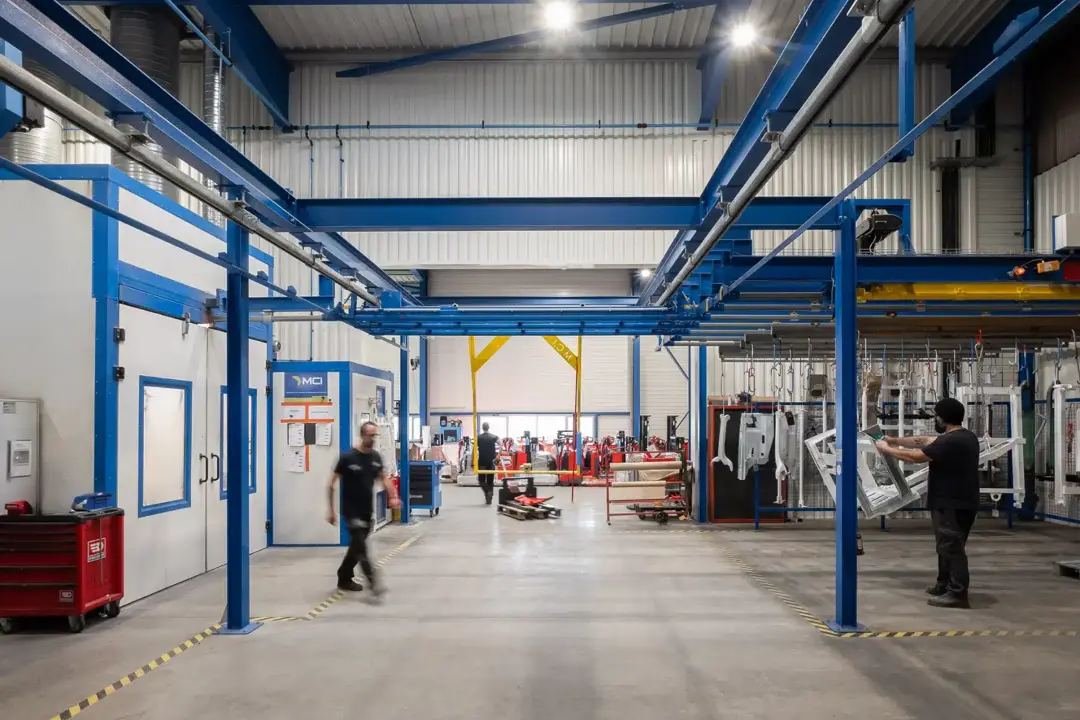
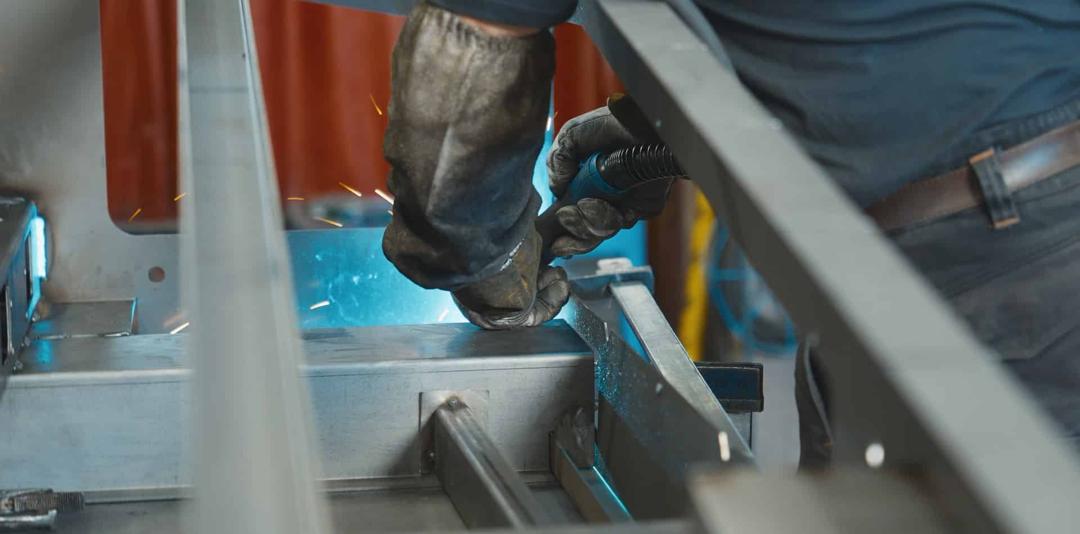
The first step is to strip the steel part as soon as it's received, through a sandblasting operation to clean it thoroughly. After taking the measurements needed for marking out and cutting the stainless-steel sheet, it is shaped and welded, taking great care to ensure perfect sealing around the edges.
Full stainless-steel coating is highly effective, as the 2 mm stainless-steel sheet provides greater resistance to friction, tearing and the aggressiveness of certain environments (saline, acidic, humid, chemical…).
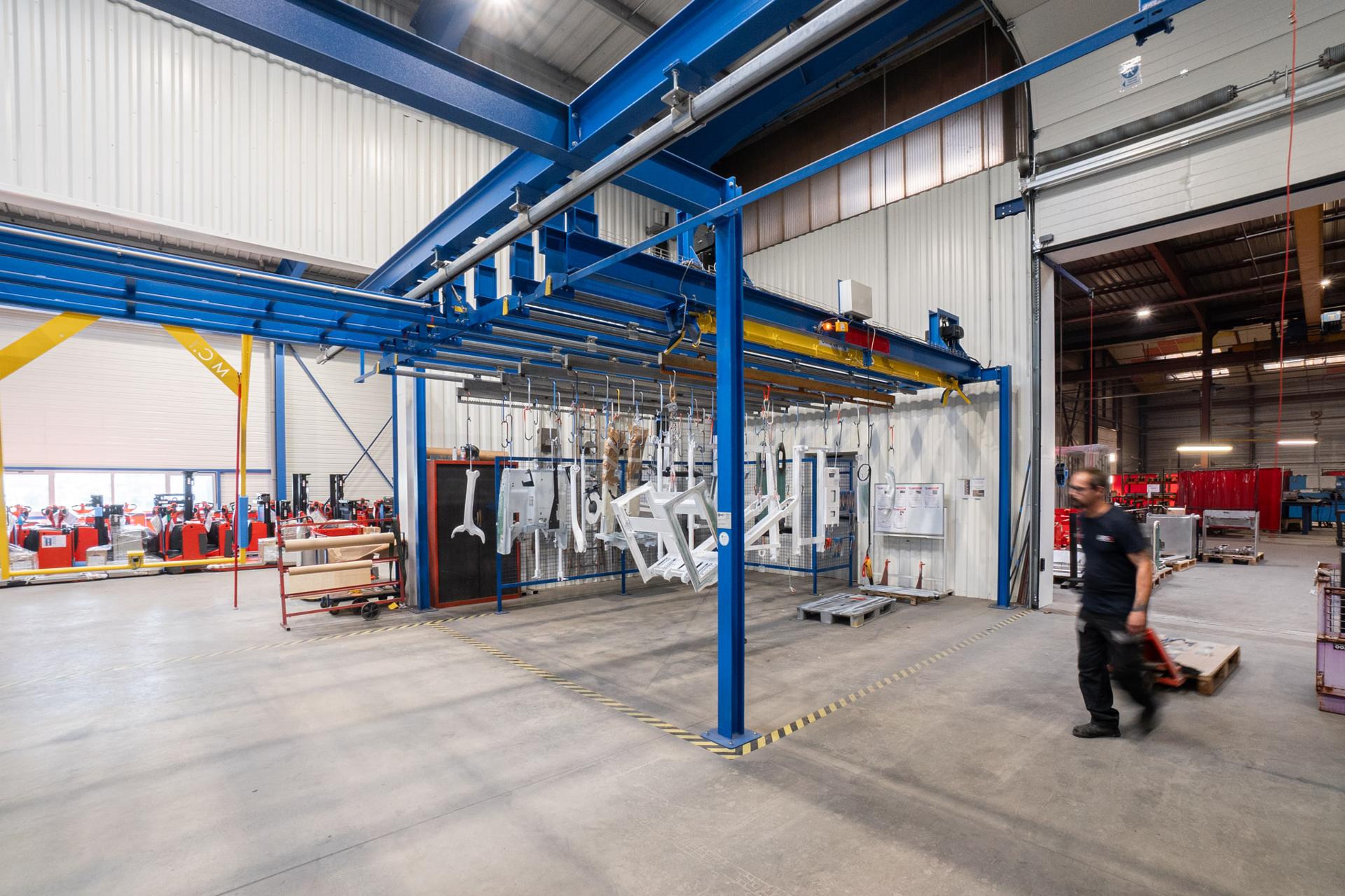
This solution can be combined with another technique: sandblasting. Any part(s) that may remain in steel can be sandblasted and then metallised by spraying molten zinc, which reinforces the anti-corrosion properties. Artech's teams then take care of the finishing, notably painting the coated part.
These two processes complement each other:
- stainless-steel coating on the parts of the piece directly exposed to friction
- sandblasting / metallisation on those less exposed to external aggression and direct contact
Forklift forks are the perfect illustration of how these two solutions complement each other: the top of the forks is covered with stainless-steel sheets, while the underside is simply metallised.
A custom stainless-steel coating solution for every issue
Stainless-steel coating becomes necessary as soon as steel parts operate in an “aggressive” environment. This may be saline (oyster farming, for example), humid (dairies, slaughterhouses, industrial butchery and delicatessen production) or chemical. Incidentally, this stainless-steel coating process was originally developed for the “explosive risk” sector (manufacturers of solvents and paints), because stainless steel, among other qualities, does not generate sparks!
You should also know that, as well as improving the part's anti-corrosion properties, stainless-steel coating makes cleaning easier. Most of the time, a simple hose-down is enough, with no risk of paint flaking or other residue contaminating areas that, as in the food industry, require impeccable hygiene.
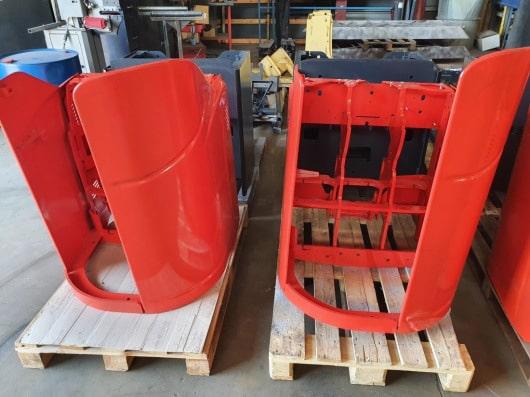
Today, these applications mainly concern the modification of pallet trucks and electric stackers in the food and chemical industries. These solutions and applications could undoubtedly interest many companies in these fields, or indeed other sectors!
Companies are aware that turning to solid stainless steel comes at a significant cost: it requires redesigning parts and remanufacturing them. Stainless-steel coating, on the other hand, only requires a little extra material on existing components. And even in an environment where anti-corrosion requirements aren't extreme, stainless-steel coating remains the best alternative between “all stainless steel” and… doing nothing at all!
A solution with significant potential
Since no two clients or issues are alike, these solutions adapt to demand. Even if the forklifts or electric stackers are identical, Artech offers different stainless-steel coatings, tailored to a particular use or situation. It can offer different levels of coating, on all or part of the machines, and not necessarily the same part across different machines.
Artech also stands out for its ability to manage single-unit production and very small series, often requiring the stainless-steel coating of the part to be customised to meet a specific use. In practice, when its staff receive an operational, mass-produced cart, they dismantle it completely, retrieve the steel parts to be treated, and apply the stainless-steel coating before reassembling it.
As for corrosion points, they replace fasteners, turned parts, pins…
Additional services can be offered, such as painting in various colours and micro-blasting. The latter evens out the treated surface and adds an aesthetic touch by projecting micro glass beads onto the stainless steel.
Personalised support from a dedicated account manager
Before proposing a solution or specific application, Artech's account managers start by listening to their contact and making themselves available to answer questions, assess needs and understand expectations. What is the issue? What is the need? In what environment do their machines operate? …
Every project has its own account manager! They support the client from the first recommendations through to delivery of the treated machine(s). They advise, propose tailored solutions, and Artech launches production, if necessary, of prototype parts, samples…
In conclusion, whatever your sector of activity and however you use your equipment, if your steel parts suffer from corrosion and you're ruling out “all stainless steel”, then Artech is THE solution: coating is the most cost-effective alternative.