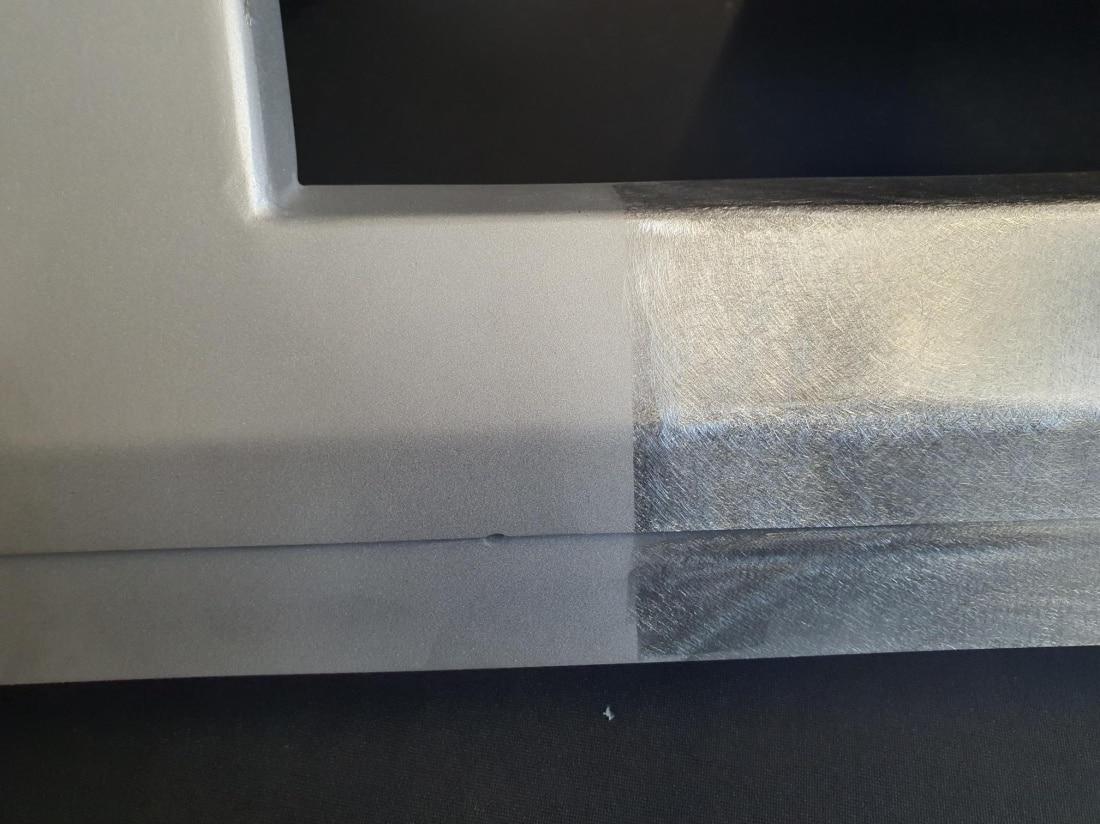
Micro-blasting is a surface treatment method used to strip or apply an aesthetic finish to stainless-steel parts (polishing or texturing). It results from projecting micro-beads under pressure onto mechanical parts of any material. The micro-beads can be made of glass, ceramic or metal.
For a textured result, micro-blasting produces a matte, even appearance. It is also used, though more rarely, for deburring.
Micro-blasting is an alternative to more traditional cleaning methods (chemical or mechanical) that can alter or even damage the surface of the part.
At ARTECH, we use micro-blasting exclusively on stainless-steel parts. Our micro-blasting booth, measuring 5m x 2.5m x 2.5m, can accommodate parts weighing several hundred kilos.
The advantages and drawbacks of micro-blasting
Micro-blasting gives stainless steel a matte, uniform surface while preserving its natural colour, without any additional treatment. It is therefore attractive from an aesthetic standpoint.
It also effectively removes stains and weld or paint residue.
It is a non-toxic process for the environment, with no chemical or harmful products.
On the other hand, micro-blasting is not recommended for parts exposed to highly corrosive environments: since it alters the surface condition of the stainless steel, it reduces its corrosion resistance. In addition, to prevent any subsequent corrosion, care must be taken to remove all abrasive particles embedded in the stainless steel after micro-blasting.
Applications of micro-blasting
Here are a few examples of applications:
- Surface preparation before coating or painting
- Removal of burrs and imperfections
- Cleaning of machined parts
- Surface polishing
- Surface treatment to improve corrosion resistance
- Preparation of parts before welding
This can suit sectors such as industrial handling, street furniture, restoration, or certain art pieces.