Metallisation: what is it?
Metallisation (sometimes called thermal spraying) is a surface treatment solution that involves melting a zinc or aluminium wire (or a zinc/aluminium alloy) and spraying it as particles onto steel parts using a flame or electric arc gun.
The molten metal particles bond together on contact with the part, forming a protective film.
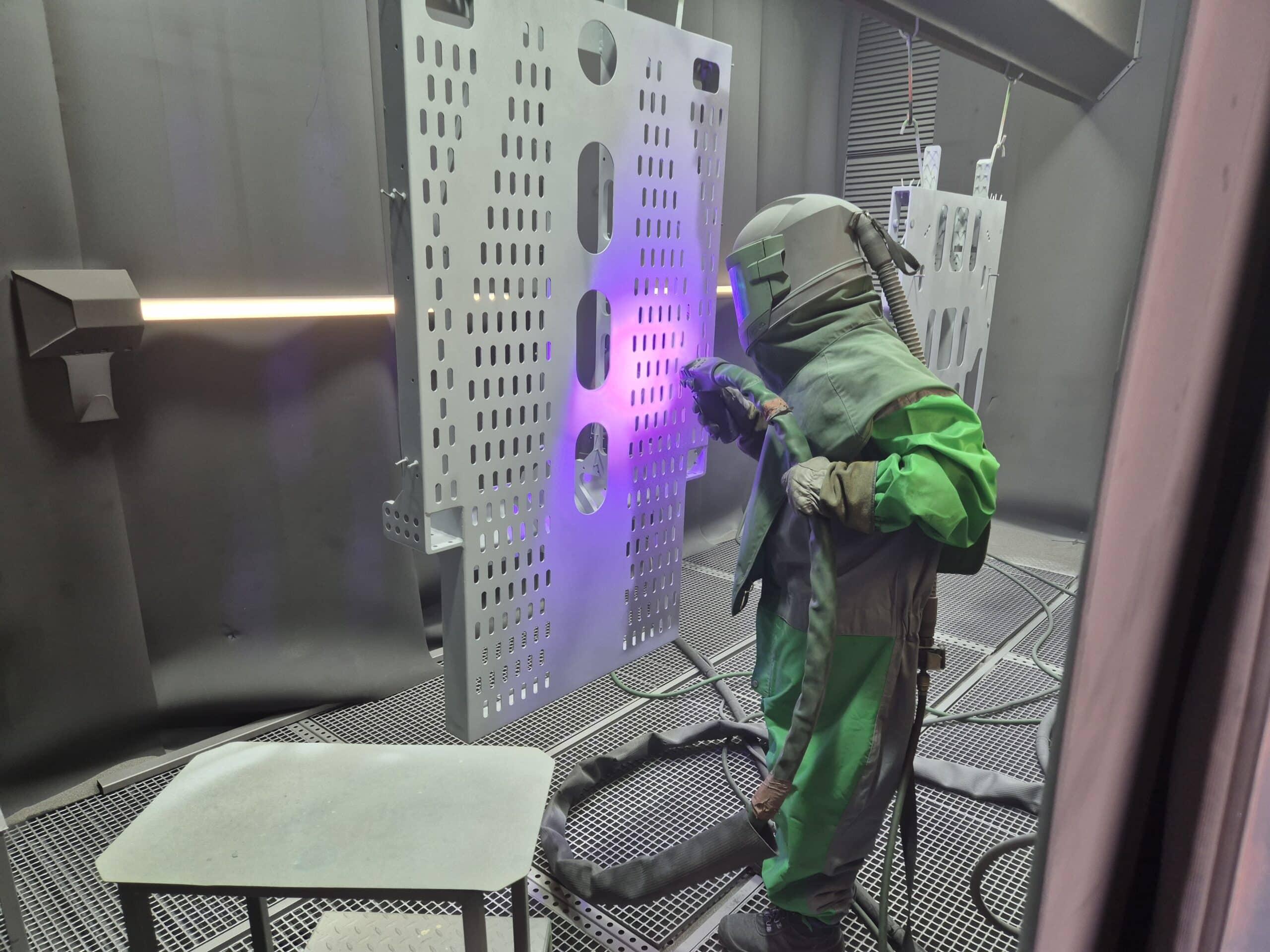
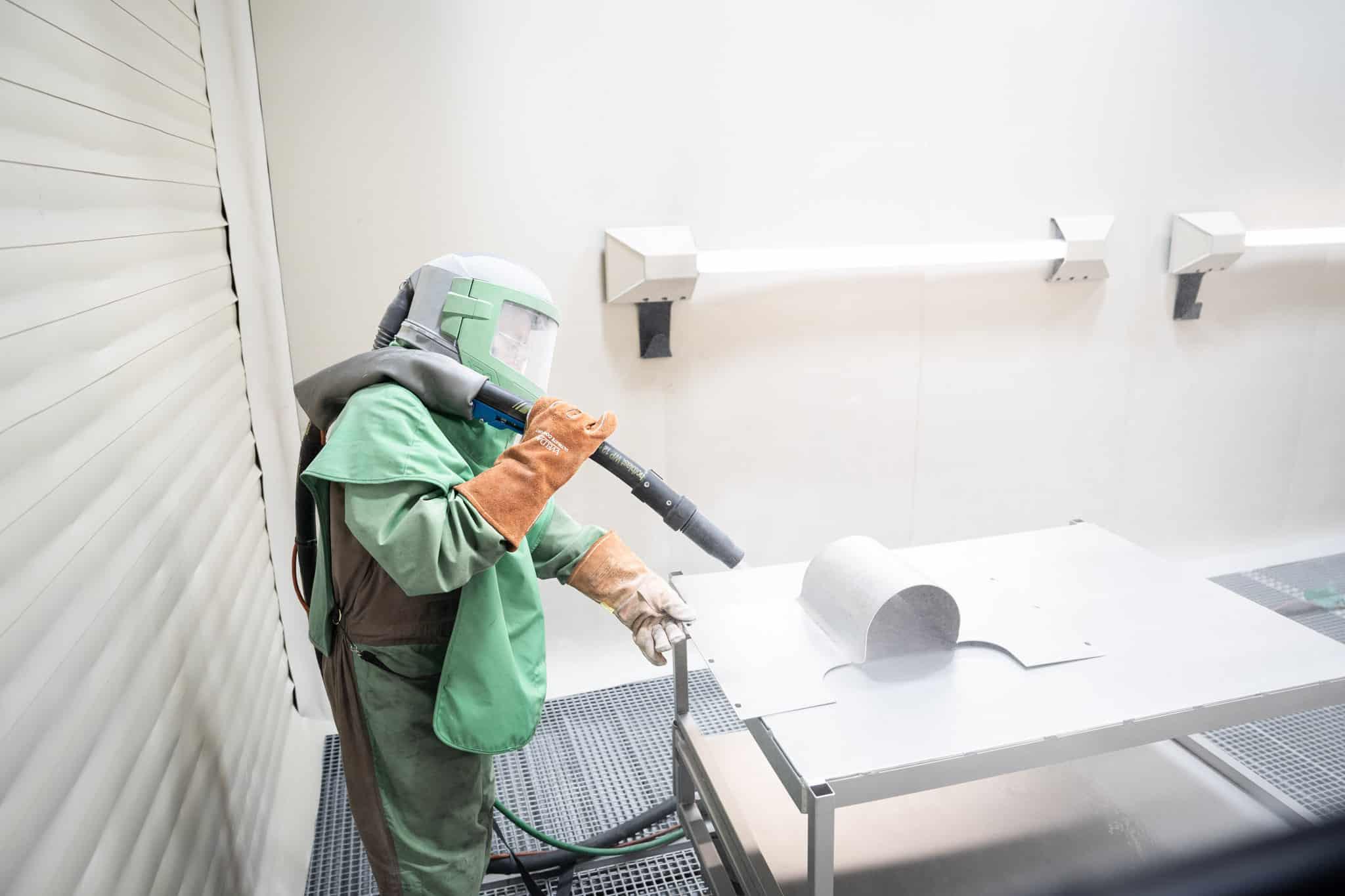
As with any surface treatment, preparing the substrate is essential. The part to be treated must first undergo surface preparation, namely the projection of an abrasive (shot-blasting). The aim is to obtain a clean surface free of impurities while creating roughness to help the metal droplets adhere to the asperities created by the abrasive.
Metallised parts are then often painted.
What are the different steps of metallisation?
The different steps are:
- Shot-blasting: projecting steel shot (small prismatic steel pellets) onto the surfaces to be treated, to clean and prepare the surface to receive the zinc layer.
- Metallisation: spraying a 60µm to 80µm layer of zinc
- Liquid paint: spraying a layer of paint
Metallisation with an electric gun
At Artech, we have chosen an electric arc gun, which does away with the use of gas during the metal wire melting process. This clears the workstation of gas cylinders, making the working area safer for our staff.
The wire we use is a Ø2mm zinc-aluminium wire.
What are the benefits of metallisation?
Metallisation is an excellent anti-corrosion solution, particularly suited to very large parts that cannot fit into hot-dip galvanising baths, or to parts whose shape and/or design are unsuited to galvanising. It is also recommended for restoration work (very old parts).
- Excellent abrasion resistance
- Low temperature rise of the substrate (below 100°C)
- No risk of distortion – for sheets of 1 to 2 mm, please contact us
- No alteration of mechanical properties
- Instant protection
- No drying time required
- No cooling period required
- Excellent base for paint thanks to the roughness of the deposit — also an excellent base coat before painting for aesthetic parts.
- Easy to apply
- The zinc layer is 100% metallic (no binder)
Does metallisation have any drawbacks?
Metallisation does indeed have one drawback: unlike hot-dip galvanising, it cannot protect the inside of tubes.
| Critères | Métallisation | Galvanisation à chaud |
| Procédé | Projection à froid de zinc-alu fondu au pistolet à arc électrique | Immersion de la pièce dans un bain de zinc en fusion (environ 450°C) |
| Taille des pièces | Aucune limite dimensionnelle, adaptée aux très grandes pièces | Limitée à la taille du bain de galvanisation |
| Élévation de température | Faible, inférieure à 100°C : aucun risque de déformation | Élevée, environ 450°C : risque de déformation sur pièces fines |
| Protection de l'intérieur des tubes | Non | Oui |
| Délai avant mise en service | Protection immédiate, pas de délai de séchage ni de refroidissement | Nécessite un temps de refroidissement après le bain |
| Norme de référence | ISO 2063 | NF EN ISO 1461 |
En résumé : la galvanisation à chaud reste la référence pour les pièces qui entrent dans la taille du bain et dont l'intérieur des tubes doit être protégé. La métallisation prend le relais dès que la pièce est trop grande, trop complexe, ou qu'elle est déjà en service et doit être rénovée sans démontage.
What are the use cases for metallisation?
- Industrial handling
- Street furniture
- Gates / fencing
- Restoration
- Art
- Large parts
- Parts with holes that would be blocked by galvanising
Vous avez un besoin en équipement ou en ouvrage chaudronné ?
Parlons-en. Que ce soit pour un prototype, une petite série ou un équipement spécifique, nos équipes vous accompagnent de l'étude à la fabrication.