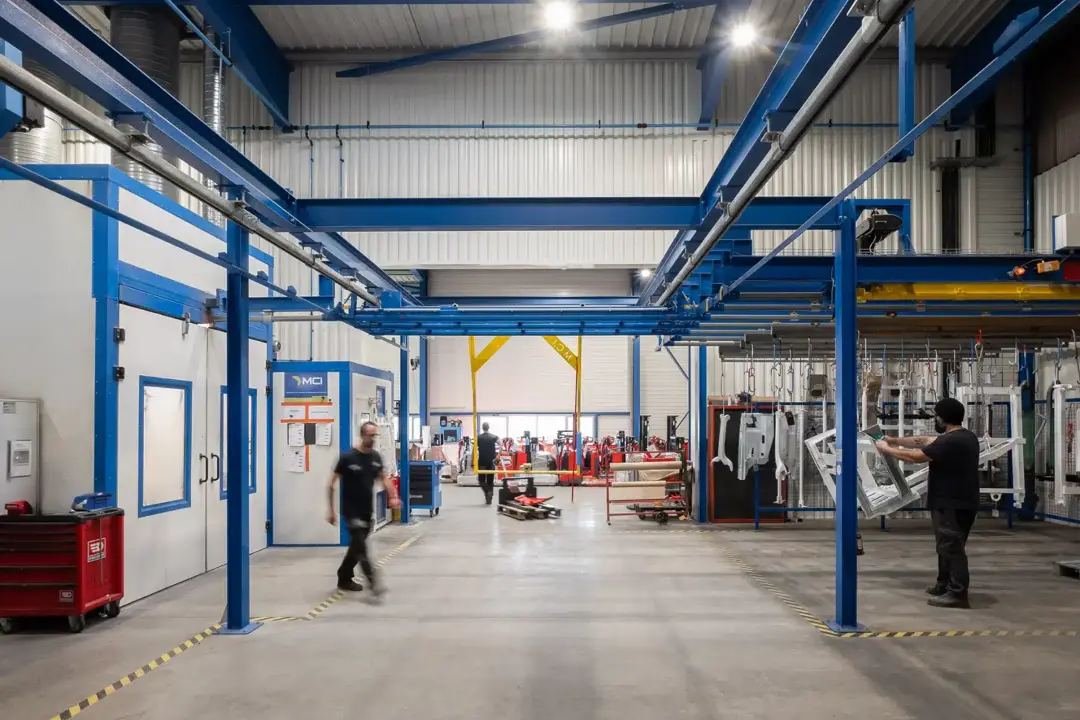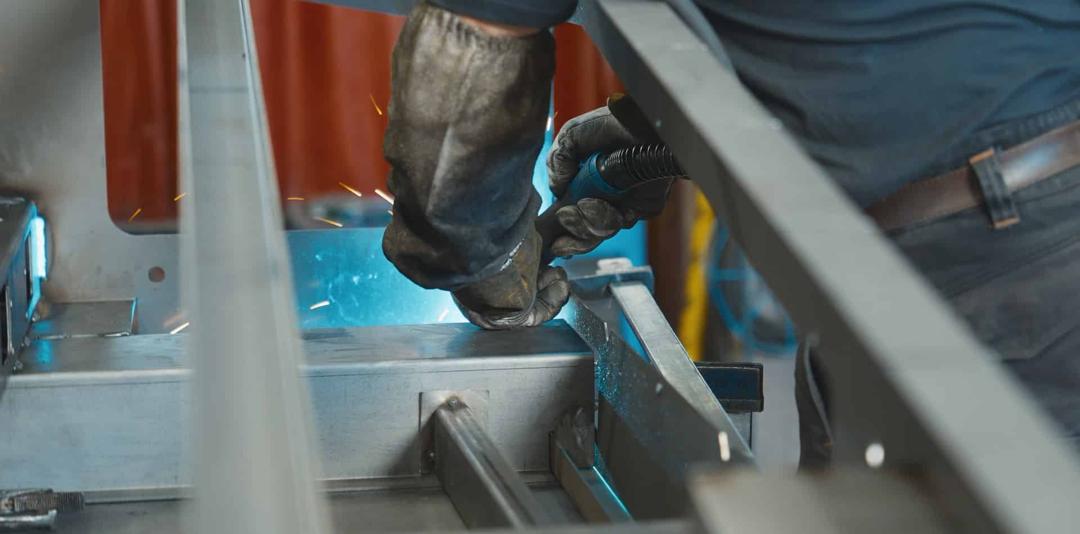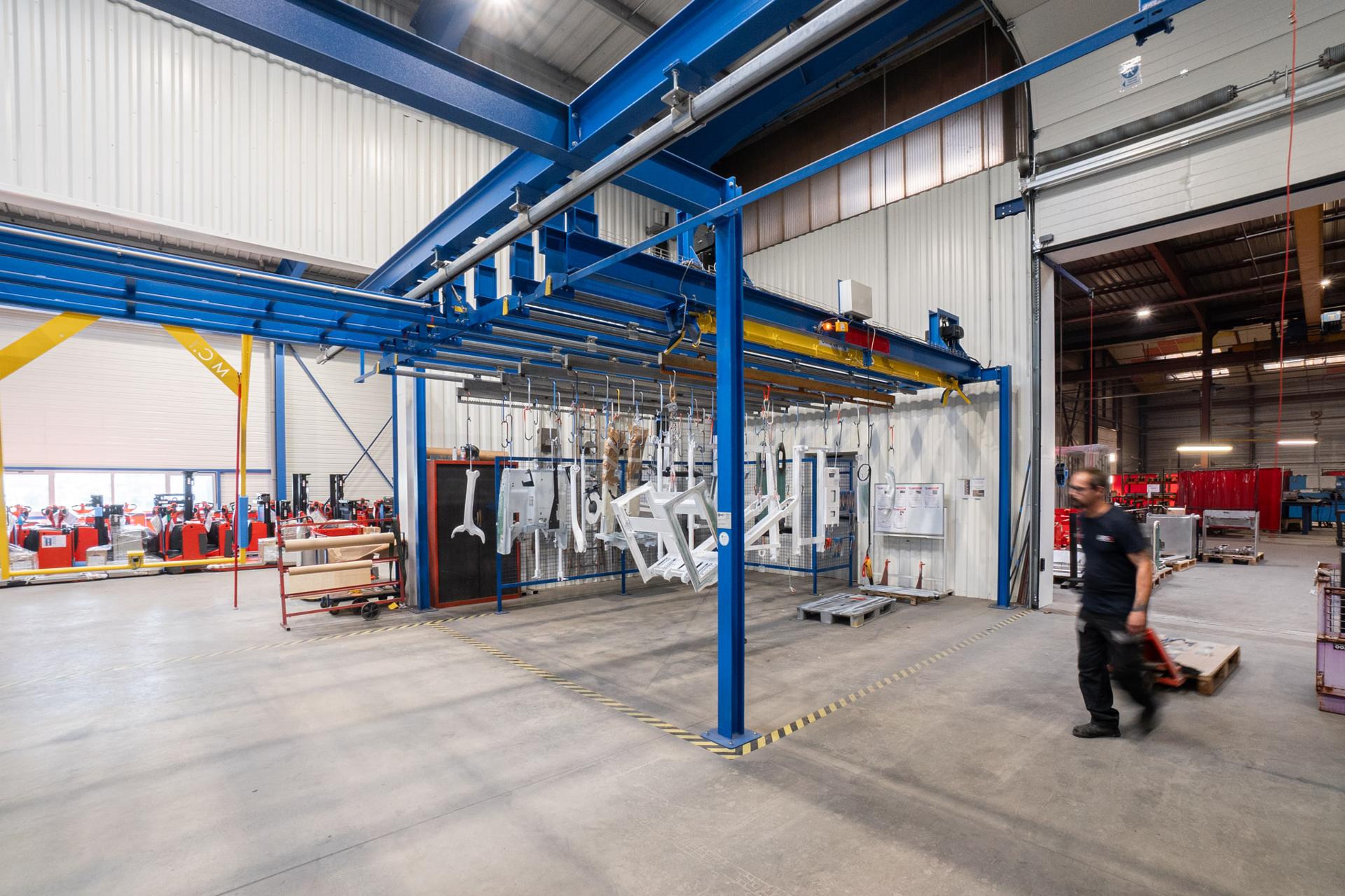

Galvanising is an anti-corrosion treatment. Parts are dipped in a bath of molten zinc. The advantage of hot-dip galvanising is that it provides complete anti-corrosion protection for the part, both inside and out.
This technology is mainly used for equipment exposed outdoors, such as street furniture, tubular frameworks, or RFID gates (entry/exit systems used in shops)…
The high strength of galvanised steel
After being cleaned, when the steel is dipped into a bath of molten zinc (450°C), an alloy bond forms, and the layers are subsequently coated with pure zinc.
The excellent abrasion resistance of hot-dip galvanising comes from the first alloy layer with the steel, which is stronger than the base metal. The smoother outer zinc layer absorbs impacts, while the inner layers provide effective protection to the base metal.
Galvanising against rust and corrosion
When steel is scratched, the exposed area corrodes and a rust bubble forms. This bubble swells and creates a blister that lifts the paint off the metal. Without intervention, the corrosion cavity continues to spread.
Galvanising therefore provides sacrificial protection against this risk. With galvanic protection, the zinc coating protects the steel it's bonded to. In the case of hot-dip galvanising, if the coating is scratched, the zinc, thanks to its electrochemical properties, will protect the metal from corrosion.
Unlike other anti-corrosion processes, no touch-up is needed in the event of small cracks in the layers.